

Lake Kawaguchi & Fujiyoshida: A First-Timer’s Travel & Photography Guide to Mt. Fuji
AKA the ultimate Mt. Fuji day trip and weekend itinerary from Tokyo.
I usually cringe at titles claiming to be the ultimate guide, but let’s be honest: search algorithms love them, and if it brings you here to read actual practical advice, I’ll play along.
Photographing Mt. Fuji is both deeply rewarding and notoriously frustrating. The mountain is famously shy—wrapped in clouds for much of the spring and summer—and surrounded by ever-shifting crowd regulations and viral photo spots. Whether you’re planning a quick Mt. Fuji day trip from Tokyo or spending a full weekend in Lake Kawaguchi, this guide breaks down how to get there, where to shoot, and how to get perfect views.
At a Glance: Quick Travel Details
Best Time for Visibility: November to February (Early mornings)
Travel Time from Tokyo: 1 hr 45 min – 2 hrs
Top Travel Method: Highway Bus from Shinjuku or Fuji Excursion Train
Must-See Spots:Chureito Pagoda, Honcho Street, Oishi Park
When to Visit for the Best Mt. Fuji Views
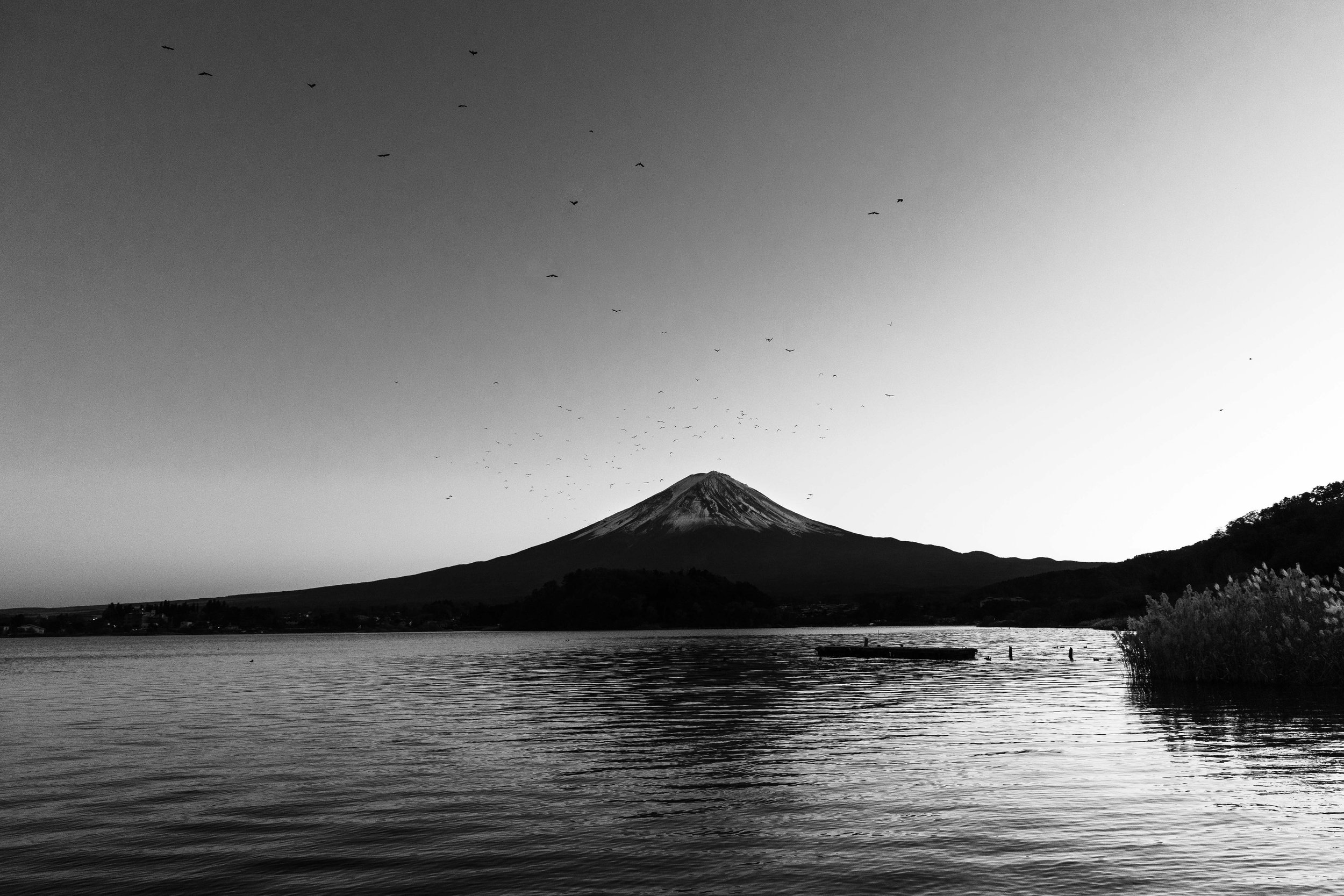
Fuji-san at sunset.
If your primary goal is seeing—and photographing—Mt. Fuji clearly, timing your visit is crucial.
Best Season (November to February): Winter brings crisp, clear air, low humidity, and high atmospheric pressure. Snow caps the peak, and early mornings almost guarantee a sharp view before cloud cover builds around midday.
Shoulder Season (Late October, March–April): Fall foliage around Lake Kawaguchi (mid-November) and spring cherry blossoms (early to mid-April) offer iconic framing, though visibility becomes more hit-or-miss.
Summer (June to August): Expect heavy humidity, haze, and frequent cloud cover. Fuji often hides behind a wall of white for days at a time.
Best Time of Day: Golden hour and very early morning. Thermal updrafts usually cause clouds to wrap around the peak by 10:00 AM or 11:00 AM, even on clear days. Start at first light.
Pro-Tip: Check the live Fujigoko Live Camera online before leaving your accommodation to verify peak visibility in real time.
How to Get to Mt. Fuji from Tokyo
By Direct Express Bus (Best for Budget & Convenience)
Departure: Shinjuku Express Bus Terminal (Busta Shinjuku), Tokyo Station, or Shibuya.
Duration: ~1 hour 45 minutes to 2 hours.
Cost: ¥2,000–¥2,500 each way.
Booking Tip: Reserve seats 2–3 weeks in advance via Highway-Buses.jp or Japan Bus Online. Weekend morning traffic leaving Tokyo on the Chuo Expressway can cause delays, so book the earliest departure possible (around 6:45 AM or 7:00 AM).
By Fuji Excursion Limited Express Train (Best for Reliability)
Departure: JR Shinjuku Station direct to Kawaguchiko Station.
Duration: ~1 hour 55 minutes.
Cost: Covered partly by the JR Pass (requires a small supplement for the Fuji Kyuko Line segment).
Booking Tip: Direct train seats sell out quickly. Reserve your seat as soon as your booking window opens (typically 30 days prior).
Best Mt. Fuji Photography Spots
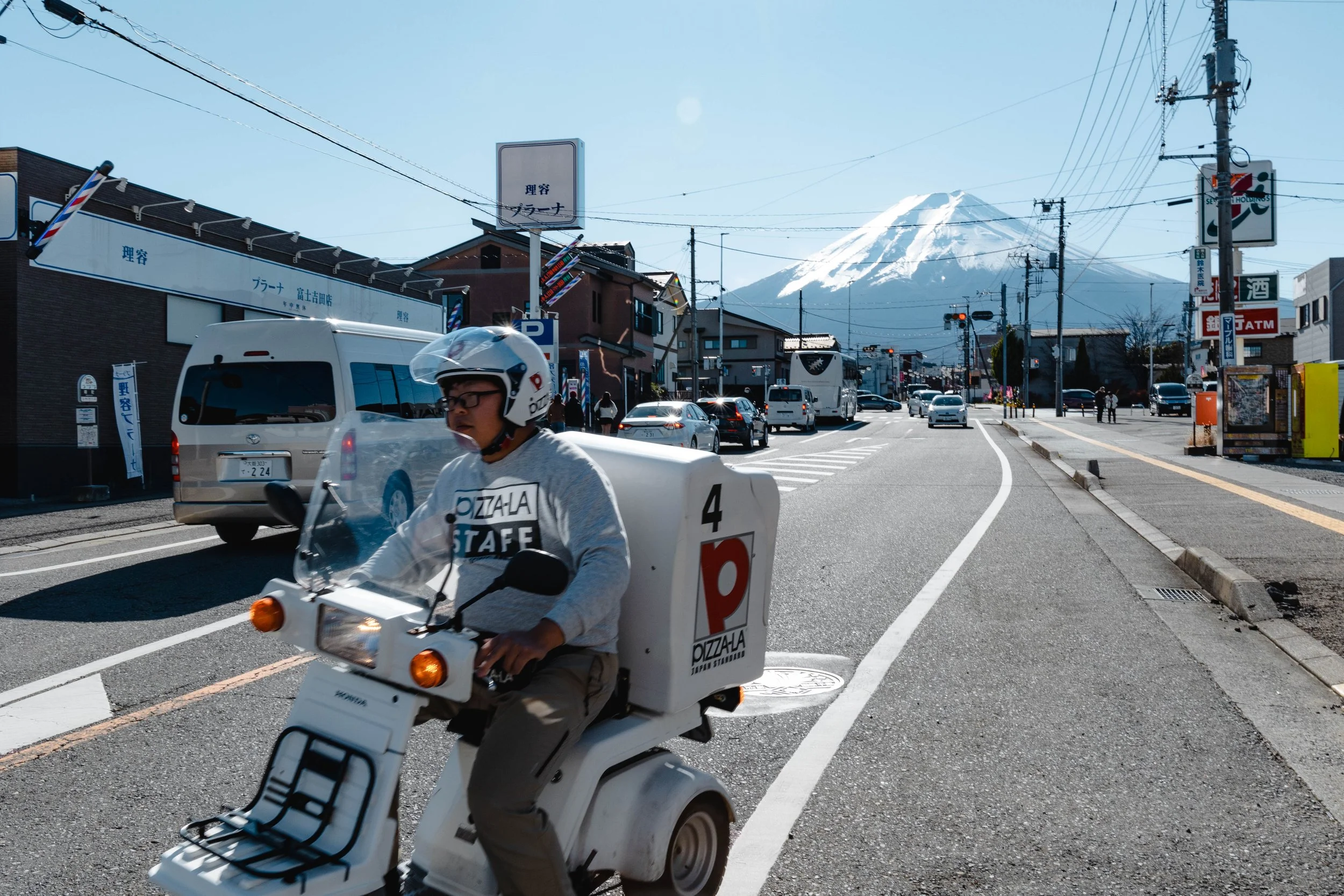
Mt. Fuji as seen from Fujiyoshida.
When photographing Mt. Fuji, avoid relying solely on heavy telephoto lenses. Environmental context, retro street elements, and wide-angle focal lengths (24mm to 35mm) often tell a far richer story.
Chureito Pagoda (Arakurayama Sengen Park)
The View: The classic postcard perspective—a five-story pagoda framed by Mt. Fuji.
Photography Tip: Arrive at sunrise. By 8:00 AM, the observation deck gets packed with tour groups. Use a 28mm or 35mm lens to capture the surrounding trees along with the pagoda structure.
Honcho Street (Fujiyoshida Shopping Street)
The View: Retro Showa-era street signboards, overhead wires, and local storefronts leading toward the massive peak looming at the end of the road.
Photography Tip: Follow local safety guidelines and stick to designated sidewalk zones. A 35mm or 50mm lens helps frame daily town life against the volcano's massive scale. I liked it best at sunset.
Oishi Park (Lake Kawaguchi North Shore)
The View: Unobstructed water views across Lake Kawaguchi with seasonal flower beds (lavender in summer, crimson kochia bushes in autumn) in the foreground.
Photography Tip: Ideal for landscape compositions and capturing clear water reflections on calm mornings.
Shimoyoshida Backstreets
The View: Quiet alleyways, small train crossings, and residential corners.
Photography Tip: Step away from the main tourist hubs. Wandering the backstreets around Shimoyoshida offers raw street photography opportunities where daily Japanese life meets the backdrop of the mountain.
Itinerary 1: Mt. Fuji Day Trip from Tokyo
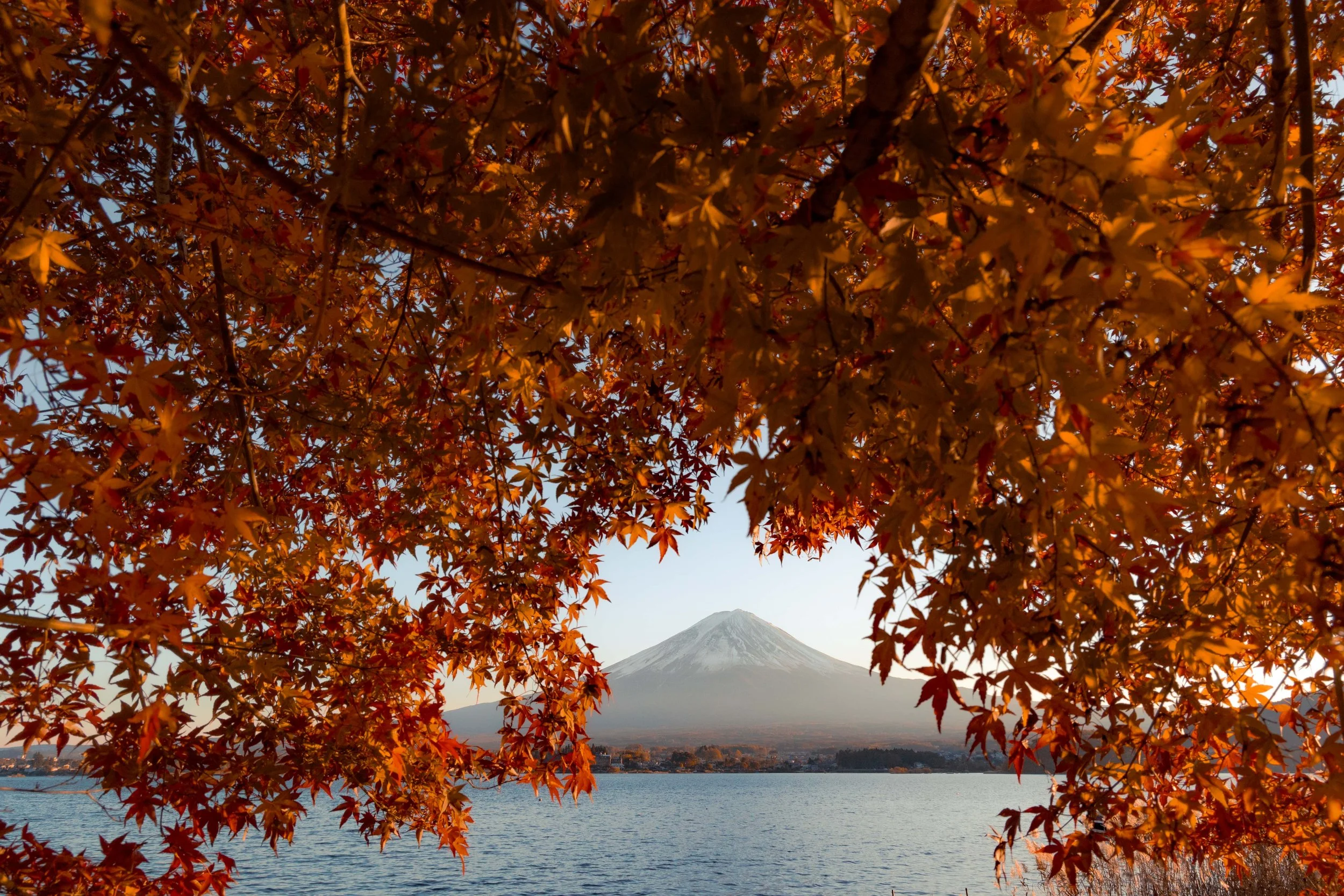
No shortage of good views at any time of the day.
Designed for travelers who want to visit both Fujiyoshida’s streetscapes and Lake Kawaguchi’s views in a single day.
07:00 AM – Travel from Tokyo to Shimoyoshida
Take an early bus from Shinjuku or the Fuji Excursion train to Shimoyoshida Station.
09:00 AM – Arakurayama Sengen Park & Chureito Pagoda
Climb the 398 steps to the pagoda early while the morning air remains clear.
10:30 AM – Fujiyoshida Street Walk & Lunch
Walk down into the retro streets of Fujiyoshida. Explore Honcho Street and the surrounding residential alleys. Grab a local bowl of Houtou noodles (thick flat noodles in savory pumpkin miso broth) or Yoshida Udon for lunch.
01:00 PM – Train to Kawaguchiko Station
Take the short 10-minute Fujikyu Railway train to Kawaguchiko Station.
01:45 PM – Oishi Park & Lake Kawaguchi Shoreline
Hop on the Kawaguchiko Red Line Sightseeing Bus (or rent an e-bike near the station) to reach Oishi Park. Walk along the lakeside path for landscape views.
04:30 PM – Sunset & Return to Tokyo
Catch the blue hour light over the water as the mountain silhouettes against the sky before heading back to Kawaguchiko Station for your return trip.
Itinerary 2: Lake Kawaguchi Weekend Trip (2 Days / 1 Night)
A slower itinerary that gives you two sunrise chances at clear Fuji views and time to explore quieter surrounding areas.
Day 1: Fujiyoshida & Lakeside Golden Hour
Morning: Arrive at Shimoyoshida around 9:00 AM. Explore Arakurayama Sengen Park and Fujiyoshida's backstreets.
Lunch: Try a local udon shop in central Fujiyoshida.
Afternoon: Check into your accommodation along Lake Kawaguchi (staying on the northern shore provides direct views from your room or ryokan). Rent an e-bike to explore the northern perimeter.
Late Afternoon / Sunset: Head to Nagasaki Park or Oishi Park for sunset light on the peak.
Evening: Unwind at a local onsen (hot spring) and enjoy a traditional dinner.
Day 2: Early Reflections & Saiko Village
05:30 AM – Sunrise at Ubuyagasaki Point
Wake up early to catch the morning light. On windless mornings, you can capture Sakatai Fuji (Fuji’s inverted reflection on the water).
09:00 AM – Kawaguchiko Sightseeing
Take the Mt. Fuji Panorama Ropeway for elevated views, or visit the gardens at the Kawaguchiko Music Forest Museum.
12:00 PM – Saiko Iyashi-no-Sato Nenba Excursion
Take a short bus or taxi to nearby Saiko Iyashi-no-Sato Nenba, a reconstructed traditional thatched-roof village that is much quieter than Lake Kawaguchi’s main strip.
04:00 PM – Depart for Tokyo
Return to Kawaguchiko Station for your evening departure back to Tokyo.
Frequently Asked Questions (FAQ)
Can you do a day trip to Mt. Fuji from Tokyo?
Yes. Direct express buses from Shinjuku take around 1 hour and 45 minutes, making it straightforward to visit top spots like Chureito Pagoda and Lake Kawaguchi in a single day.
What is the best month to see Mt. Fuji?
The winter months from November through February offer the highest probability of clear skies and visibility due to low atmospheric humidity.
Is Lake Kawaguchi or Fujiyoshida better for photography?
Both offer distinct styles. Fujiyoshida is ideal for urban, street, and architectural compositions (such as Honcho Street and Chureito Pagoda), while Lake Kawaguchi offers wide-angle landscape and nature photography.
