

The Kii Peninsula: a Japan Road Trip from Osaka Through Coastal Cliffs, Sacred Shrines, and Hidden Towns
Japan’s bullet trains are incredible, but they follow a strict, well-worn line. If you want to see where the raw Pacific coast slams into sacred mountain ranges, you have to get behind the wheel.
This 7-day road trip loops down from Osaka through the rugged, mystical Kii Peninsula (through Wakayama and Mie prefectures). It’s a route defined by dramatic coastal geology, ancient pilgrimage routes, incredible seafood (or so I’m told, seafood is not really my thing), and deep spiritual history, all while keeping daily drives well under the 3-hour mark.
The Route (December 2025)
Osaka → 白崎海洋公園 → Senjojiki → Torike Caves → Kumano-Nachi → Onigajo → Oharaimachi → Okage Yokocho → Mikimoto Pearl Island → Seki Post Town → Osaka
Day 1 — Osaka to Shirahama: Sea Breezes and Seafood
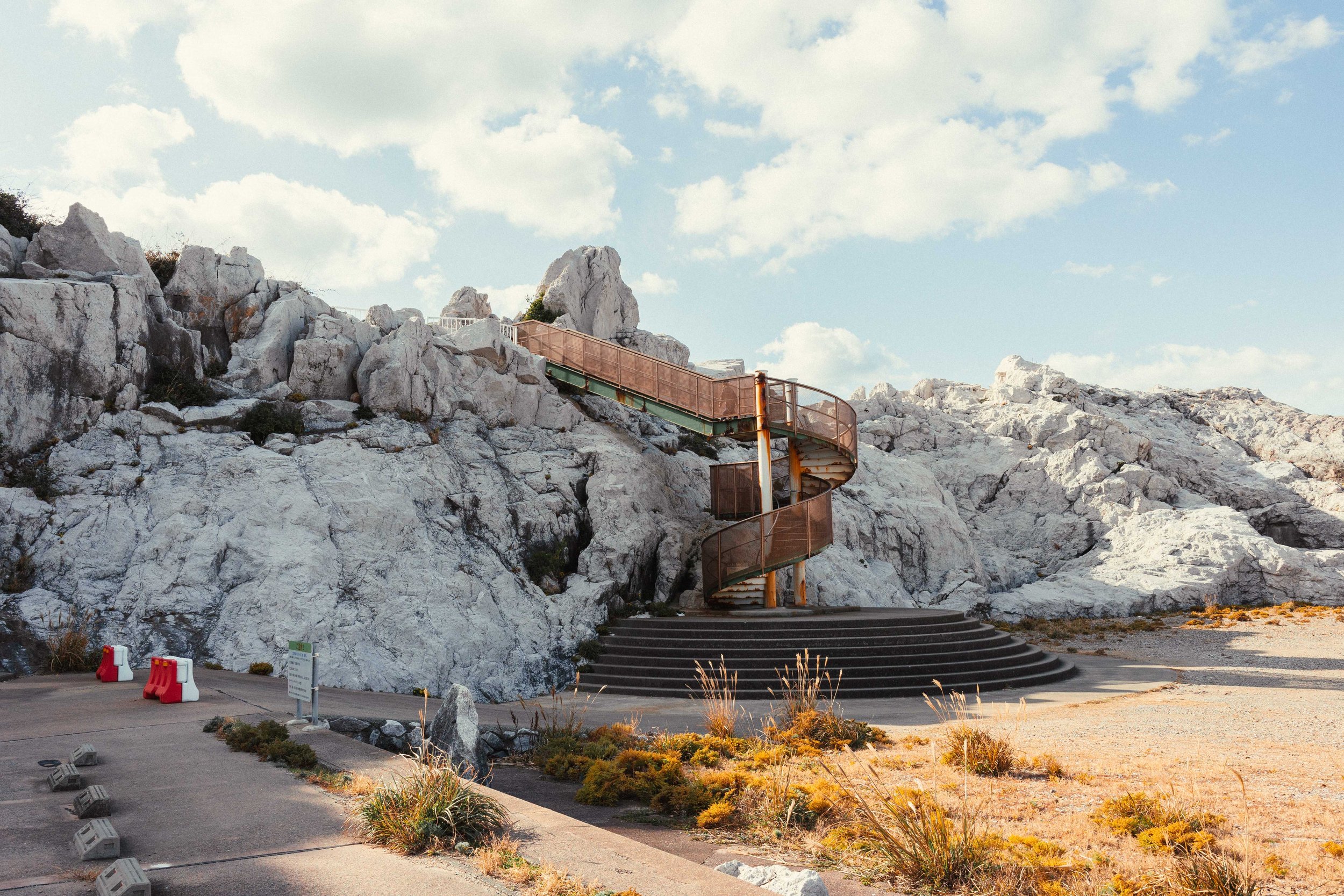
Stairway to heaven
Your journey kicks off by heading south out of Osaka, trading the neon concrete for the open coast of Wakayama. Get ready for beautiful sights along the ocean while you drive to 白崎海洋公園: a really beautiful seaside natural area featuring rugged limestone cliffs and a staircase to a small observatory.
When you’re done soaking in the sea breeze and the wonderful landscapes it’s time to get back to the car and to the next stop: Toretore Market.
This isn't just a market; it’s one of the largest seafood hubs in western Japan. Grab incredibly fresh sashimi or select raw seafood and wagyu skewers to grill yourself at the outdoor BBQ pits.
The first accomodation of the trip is then Crystalexe Nankishirahama 2. An excellent, modern base close to the area's white-sand beaches, perfect for relaxing after your first day on the road.
Day 2 — Shirahama to Kushimoto: Sculpted Cliffs and Hidden Caves
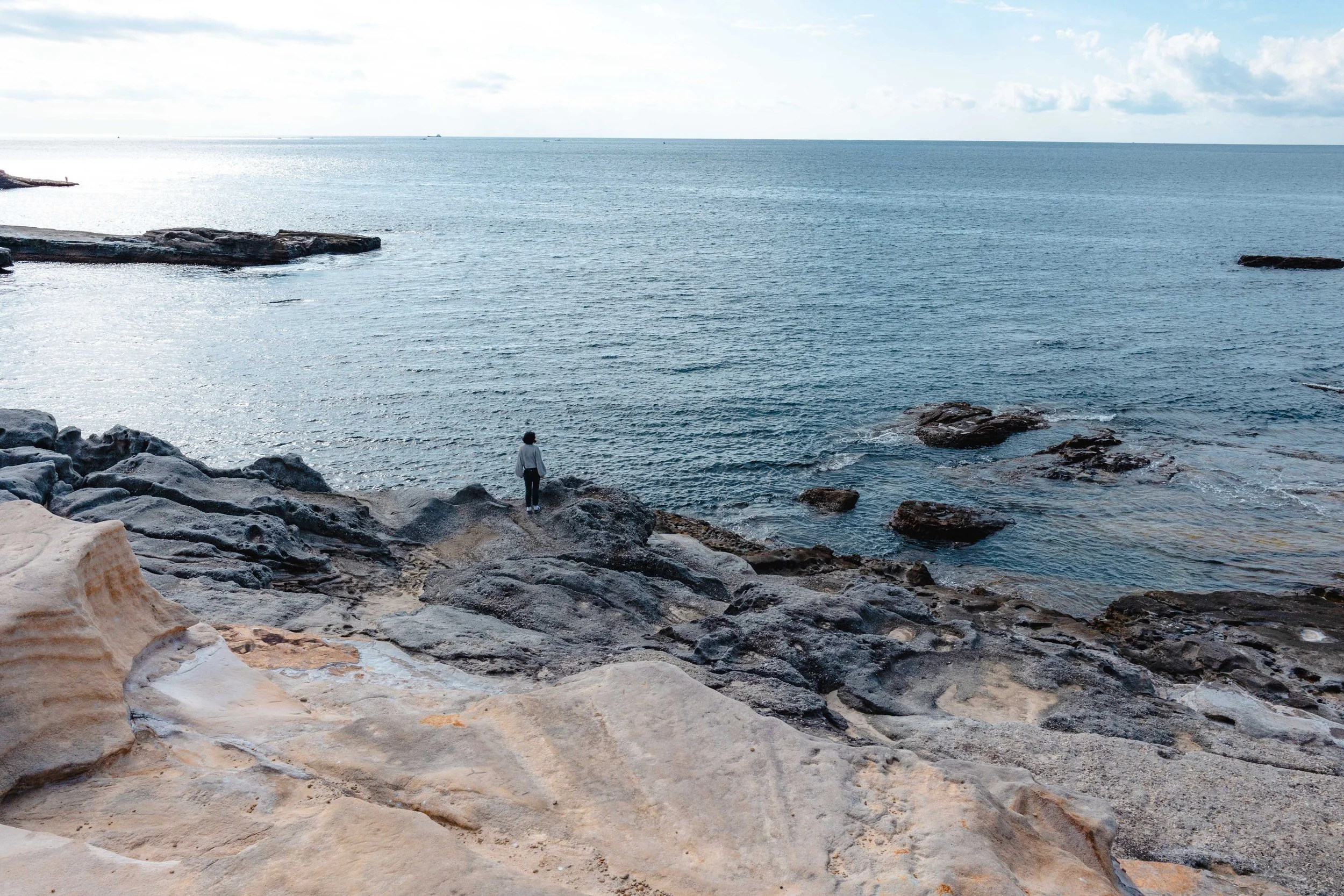
Take in the beauty of the view from the Senjojiki Rock Plateau.
Today is all about the power of the Pacific Ocean carving into Japan’s volcanic coastline. Head for the Senjojiki Rock Plateau (meaning "thousand tatami mats"): these massive, tiered sheets of soft sandstone look like natural architecture sloping right into the crashing waves.
If they are open (they weren’t when I was there), add a visit to the Sandanbeki Caves. They are just down the road; take the elevator down into a dramatic cavern where the sea rushes violently into the rock. Historically, this served as a hidden base for Kumano pirates.
Then go and catch the sunset from the Torike Caves and plateau. It can be a bit of an adventure to get down to sea level but it’s totally worth it. So beautiful and quiet!
The accomodation for tonight is the Mercure Wakayama Kushimoto Resort. Features fantastic ocean views overlooking the Hashigui-iwa rocks—a spectacular line of natural stone pillars stretching into the sea and in the offseason is incredibly cheap.
Day 3 — Kushimoto to Nachi-Katsuura: The Sacred Waterfall
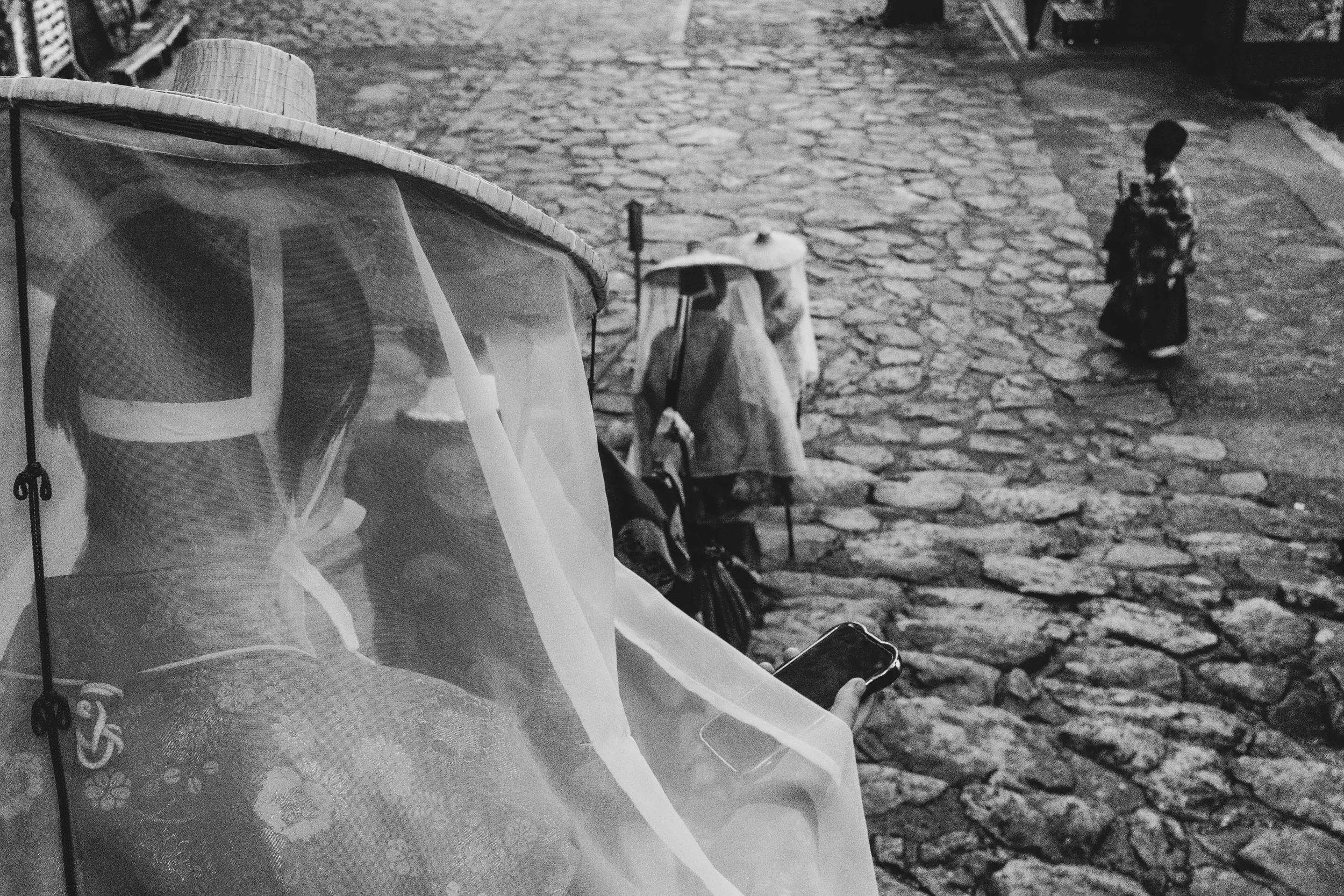
With a bit of luck you might catch a wedding.
This image is part of my photo-book “Disconnections”.
Today you enter the spiritual heart of the Kumano region, where nature worship and ancient architecture blur.
The Kumano-Nachi Grand Shrine & Seiganto-ji Temple area is the setting where some of the most iconic images of Japan have been taken. You have already likely seen the brilliant vermilion three-story pagoda of Seiganto-ji perfectly framed against the backdrop of Nachi Falls, Japan’s tallest single-drop waterfall, on the internet or some postcard. Take your time walking up the stone paths surrounded by ancient cedar trees.
Spend the night at Harusame in Kumano.
Day 4 — Kumano to Owase: Rock Formations and Fishing Hubs
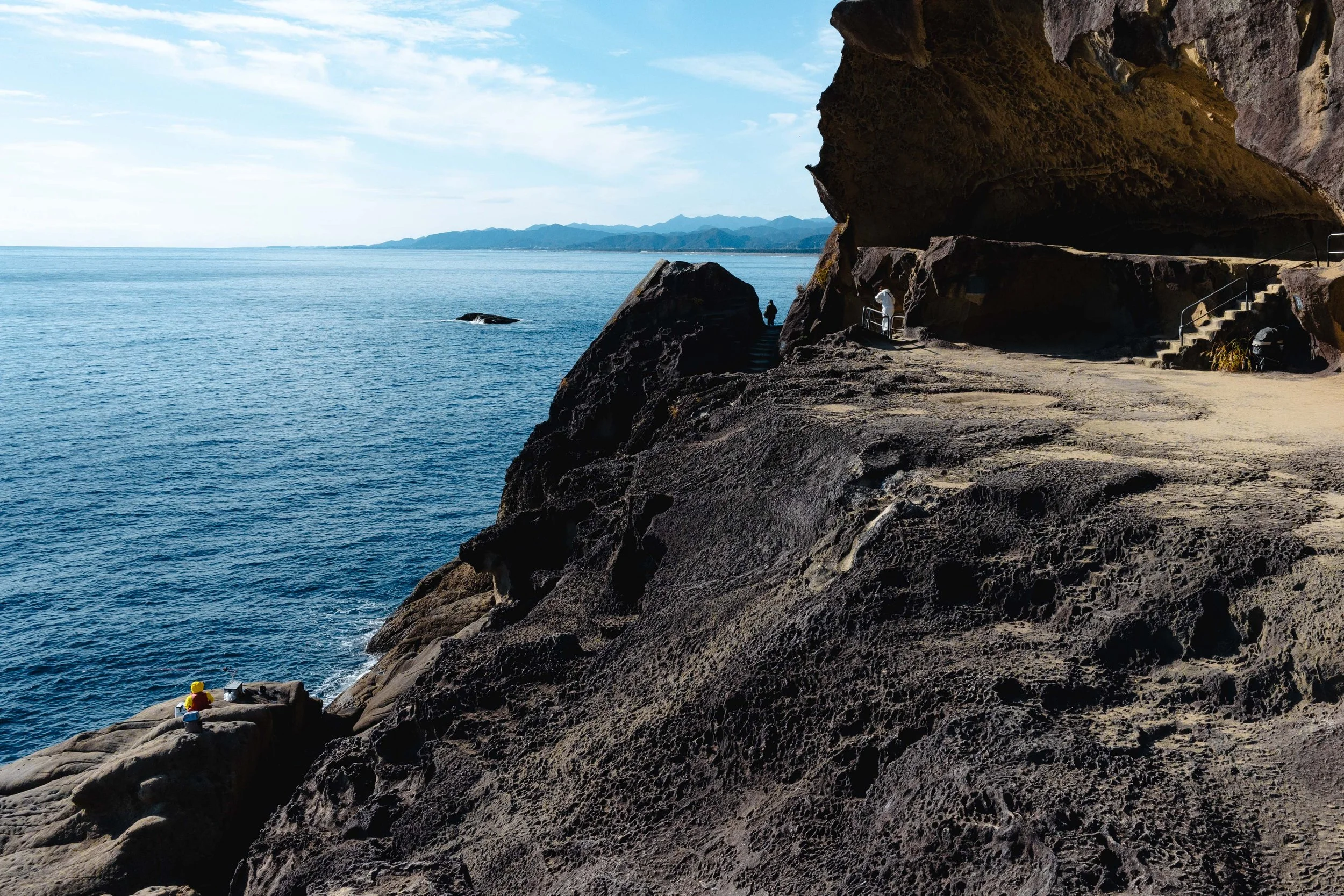
View from the Onigajo Rock Formations.
Leaving the shrines behind, you cross into Mie Prefecture, following a coastline that changes shape with every tunnel you pass through.
First stop: Onigajo Rock formations. Known as the "Demon's Castle," this is a stunning 1.2-kilometer stretch of wave-eroded cavern walls and jagged volcanic cliffs right along the sea edge. It’s totally worth to walk the full lenght of the path and then circle back. I had a great time there.
Your next stop will be: Owase Fish Market Ototo, a fantastic, no-frills local market where you can experience a working fishing port vibe and load up on fresh local seafood bowls (kaisendon) for lunch.
For the night I recommend Konishiya Inn. A historic, atmospheric local inn that gives you a glimpse into classic Japanese hospitality. It’s very local and worth every cent!
Day 5 — Owase to Ise: The Spiritual Highway
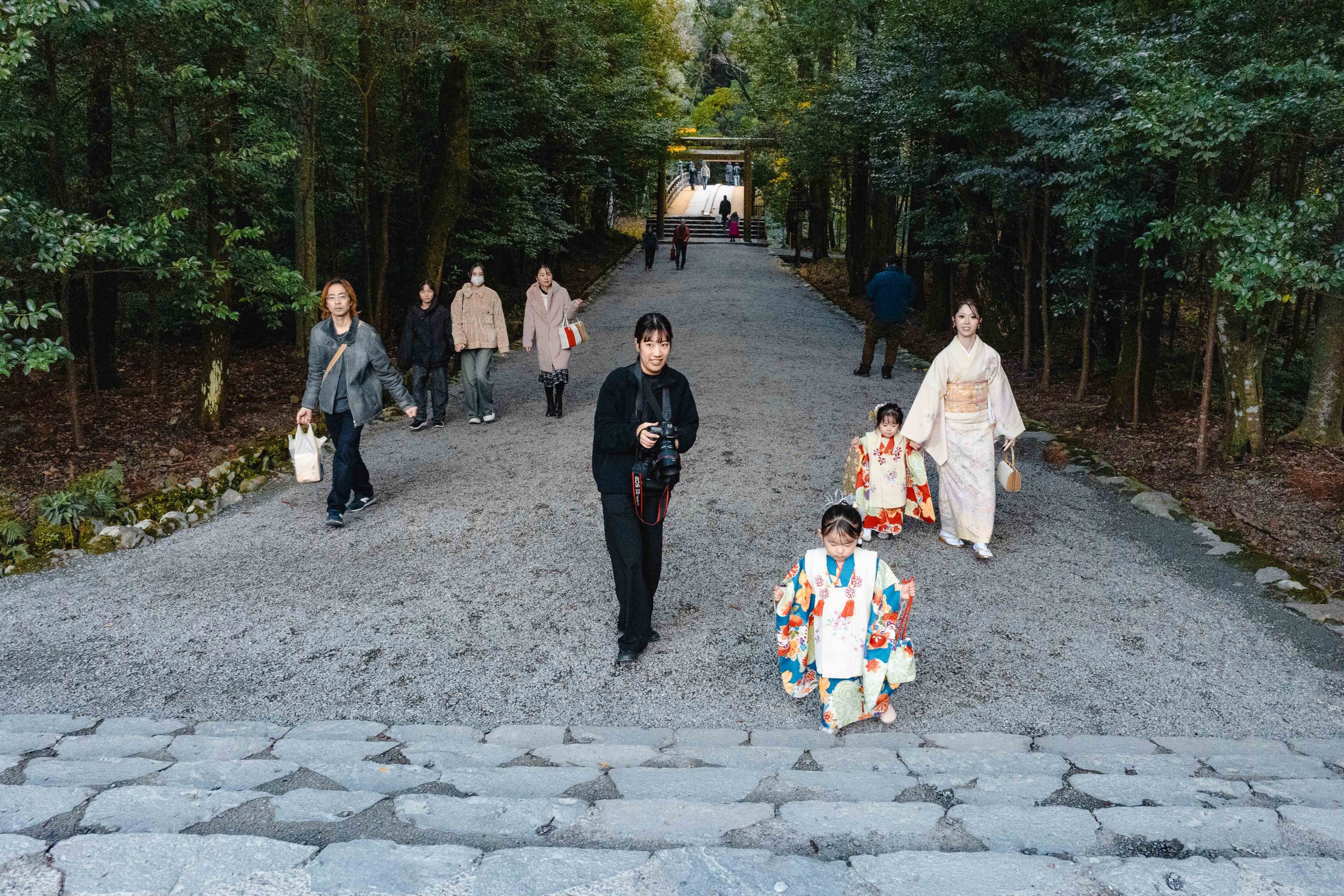
Lost in the beauty of nature and Japan’s old buildings.
Head north into the deeply historical Ise region, home to Japan's most sacred Shinto shrines.
This is another one-stop day because the area it’s big and has many things (and dishes!) to explore, set your GPS to Oharaimachi & Okage Yokocho and get ready to walk quite a bit.
Located right outside the inner Ise Grand Shrine, these beautifully preserved streets recreate an Edo-period bustling town center. It’s a sensory overload of traditional wooden architecture, street food (try the thick, soft Ise Udon and Akafuku mochi), and local craft shops.
While you’re there I also recommend visiting the Kotai Jingu shrine and the park that surrounds it.
Spend the night at Toyoko Inn Iseshi Station. Clean, hyper-convenient, and perfectly situated for a quick dinner in town.
Day 6 — Ise to Toba & Kameyama: Pearls and Historic Posts
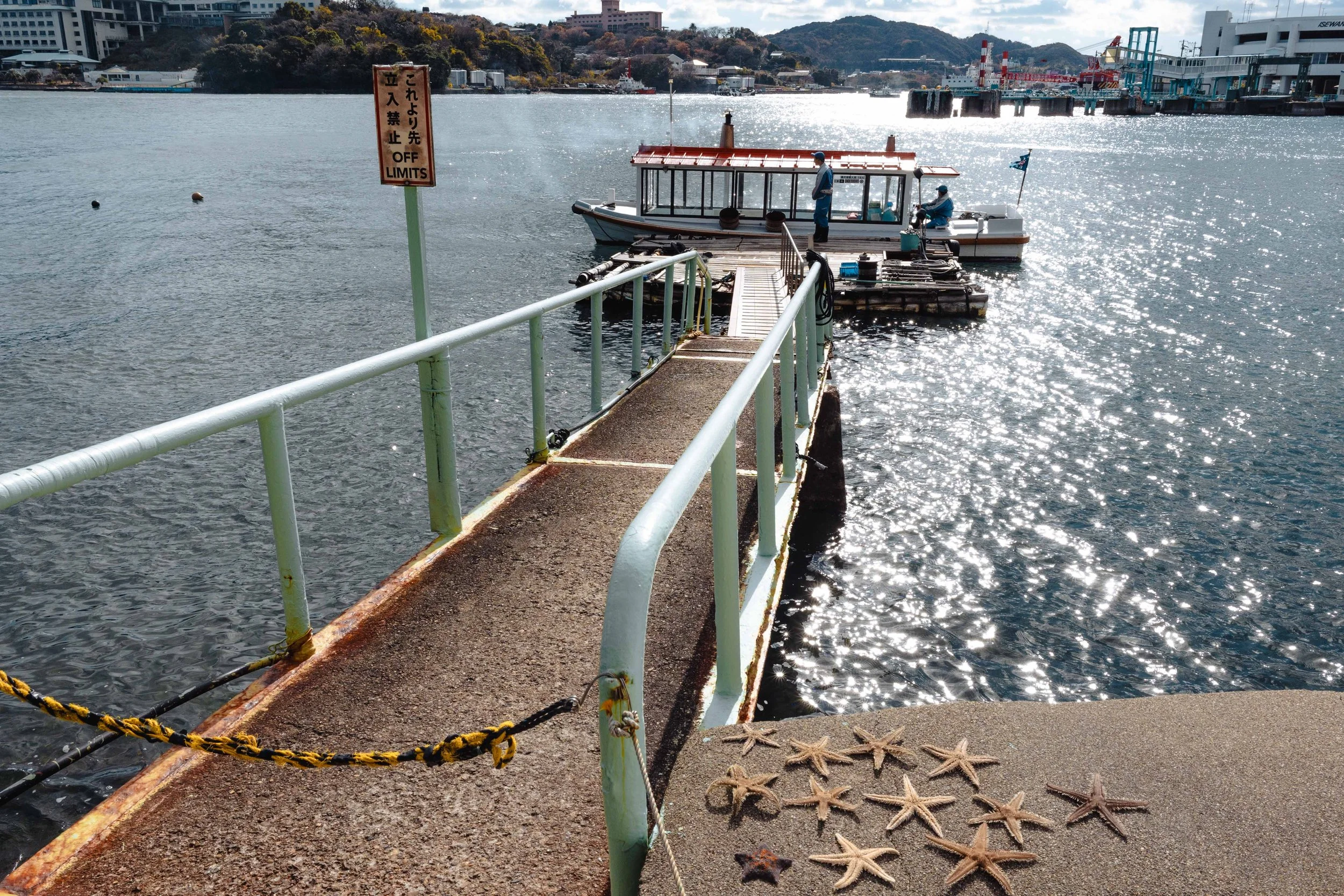
Getting ready to dive for pearls.
A mix of maritime heritage and old highway history awaits on your penultimate day.
The first stop is the famous Mikimoto Pearl Island. Located in Toba, this is the birthplace of the world’s first cultured pearls. You can explore the museum and catch live demonstrations by the Ama—traditional women free-divers who harvest oysters in distinctive white robes.
When you’re done, head for Seki Post Town (Seki-juku): a massive contrast to the coast, this beautifully preserved mountain village was the 47th post town along the ancient Tokaido highway connecting Kyoto and Edo (Tokyo). Over 200 traditional buildings remain, making it feel like a film set devoid of massive tourist crowds.
To spend the night I can recommend Candeo Hotels Kameyama. An excellent spot to unwind, complete with great bath facilities to soak away the driving fatigue.
Day 7 — Kameyama back to Osaka
Enjoy a relaxed morning in Kameyama before taking the easy highway drive back into Osaka to wrap up the loop, completing a journey that took you from the Pacific cliffs to the ancient pathways of old Japan.
The Cost Breakdown: What to Budget
Driving in Japan is incredibly rewarding, but between electronic tolls and overnight parking, the hidden costs can add up.
I forgot to take notes during this road trip so here is a realistic budget estimate for a 7-day loop through the Kii Peninsula and Ise, based on a standard compact car (like a Toyota Aqua or Honda Fit).
Fixed Upfront Expenses
These are the predictable costs you’ll lock in before or right at the rental counter in Osaka.
Car Rental (Compact Class): ¥50,000 – ¥70,000. Includes basic collision damage waiver (CDW).
ETC Card Rental: ¥330. A flat one-time fee to rent the toll transponder card.
Accommodation (6 Nights): ¥70,000 – ¥110,000. Averaging ¥12,000–¥18,000/night for a mix of resorts, business hotels, and local inns.
On-The-Road Variables
These costs fluctuate based on how much highway driving you do and where you choose to park.
Expressway Tolls (ETC): ~¥12,000 – ¥15,000. Total loop coverage including Hanshin, Kinki, and Ise Expressways.
Regular Gasoline: ~¥6,000 – ¥8,000. Based on roughly 550–600 km driven at ~¥165–¥175 per liter.
Daily Parking: ~¥2,000. Mix of free rural shrine lots and hotel overnight.
Pro-Tips for Keeping Costs Down on this Route
Always Get the ETC Card: Do not rely on cash lanes. Having an ETC card automatically applies off-peak, weekend, and rural highway discounts (often 30% off standard rates) that you can't get using the cash booths.
Check Hotel Parking in Advance: While resorts like the Mercure Kushimoto offer free guest parking, town-center stays near major stations (like Iseshi) or city hotels often charge an overnight fee ranging from ¥500 to ¥1,200. Try to get accomodation with free parking when you can.


Welcome to Hong Kong
Hong Kong is a vertical labyrinth of raw cinematic energy, making it an absolute dream for street photography. It’s a city of thrilling visual contrasts—where the intense, neon-lit density of Mong Kok gives way to quiet, hidden alleyways, and grand colonial architecture sits in the shadow of towering glass skyscrapers. From double-decker trams slicing through seas of commuters to abstract reflections, moody shadows, and steam rising from street food stalls, Hong Kong is an endless playground of geometry, scale, and human emotion.
Join internationally recognised street photographers Paolo Maschio and Tom Bugatti (website | Instagram) for an immersive workshop designed to sharpen your eye, refine your technique, and help you carve out your own unique visual voice. Over two full days, we’ll explore two distinct philosophical styles: Paolo’s humanistic approach—focusing on raw emotion, proximity, and individuals navigating the city—and Tom’s formalistic approach, where human subjects become elements of geometry, light, reflection, and abstraction within a larger frame.
Workshop at a Glance
Dates: 16-17 of January 2027
Location: Hong Kong, Hong Kong
Duration: 2 days
Price: 600€ per person
Skill Level: All levels welcome
Group Size: Maximum 10 participants
What to Expect
Two focused days, two distinct visual philosophies, and a city that never stops moving. You’ll be gently pushed to shoot more instinctively, to take the frame you almost talked yourself out of, and to trust your eye whether you're capturing close-range human emotion or abstracting subjects into geometric architecture.
Expect a genuine mix of theory, image critique, and extensive field shooting in one of the most cinematic cities in the world. As participants sign up, we will reach out directly to understand your specific goals and visual interests. Depending on the group's preferences, we will tailor our on-the-street approach—either splitting into smaller targeted groups or alternating leads—to ensure maximum personal attention.
With two instructors sharing the lead, you'll benefit from a rich dual approach. Ultimately, our goal isn't to make you shoot like us, but to help you develop your own distinct way of seeing. There’s no competition here—just a community of photographers learning from two complementary perspectives and from each other.
What You’ll Learn
Whether you've never done street photography before or you're looking to break through a creative plateau, this workshop is designed to give you concrete tools you can keep using long after you leave Hong Kong.
Over the two days we'll cover:
Humanistic vs. Formalistic Approaches — choosing whether to tell a story through personal emotion or through abstract shape, reflection, and structure;
Reading a scene — how to anticipate moments before they happen;
Composition and framing — layers, geometry, and urban scale;
Overcoming hesitation — practical techniques for shooting confidently up close;
Working with available light — navigating moody shadows, neon, and high-contrast reflections;
Editing and curation — how to select your strongest images and understand why they work.
Requirements
No prior experience with street photography is required but you’ll definitely need:
A camera you're comfortable using — DSLR, mirrorless, compact or film, all welcome;
Lenses: Wide lenses for close-quarters shooting are great, but if you are interested in capturing architectural reflections, geometric details, or abstract compositions, please make sure to bring a telephoto lens (100mm or longer);
Comfortable shoes (expect to walk several Km each day);
A laptop for reviewing and post-producing images;
Curiosity, patience, and respect for the people and places we photograph.
Pricing & Booking
The price of the workshop is €600 per person,* and it includes the following:
Pre-workshop outreach to understand your personal goals and tailor the experience;
Portfolio reviews by both Paolo and Tom;
Two days of guided shooting in Hong Kong’s most photographically rich neighbourhoods;
Theory sessions exploring humanistic, formalistic, and abstract street photography;
Daily photo critiques — reviewing your images together and understanding what's working and why;
Personal feedback tailored to your individual level and style.
Transportation, meals, drinks, travel insurance, and any other incurred costs are not included and are to be paid individually.
* All workshop participants receive a 10% discount on any future workshops they attend with me (co-sponsored workshops with other instructors excluded).
Cancellation
There are no refunds in case you need to cancel.
If we need to cancel, you will be refunded in full. We are not responsible for any reimbursement of travel expenses or other costs incurred by participants in the event that we need to cancel. Travel insurance covering cancellations, missed flights, and similar is strongly recommended. There are no partial refunds in the event a participant misses days or takes time off during the workshop for any reason.
FAQ
Do I need to be an experienced photographer?
Not at all. This workshop is open to all skill levels. The only requirement is that you're comfortable handling your own camera. Whether you're just starting out or you've been shooting for years and want fresh eyes on your work, there's something here for you.
What camera should I bring?
Whatever you already own and feel comfortable with. Street photography is about seeing, not gear. A compact camera or even a film camera is absolutely fine but you should know how to operate it.
Will we stay in the same hotel?
Accommodation is not included in the price. If you want I can share recommended areas to make it easy to stay close to the group.
Is travel insurance required?
I strongly recommend taking out travel insurance that covers trip cancellations, medical expenses and lost equipment. This is your responsibility to arrange independently.
I have a question not answered here — can I get in touch?
Absolutely. Reach me through the contacts section of this website and I'll get back to you as soon as I can.