

Kyoto: A Timeless Journey Through Temples, Traditions, and Street Photography
AKA the ultimate Kyoto travel guide 2026: A First-Timer’s Manual to Japan’s Cultural Heart.
I hate using words as “ultimate travel guide” as we know no such thing can exist in a world that moves so fast but in an era where SEO is king and search engines dictate if you’re going to see this post or not I have to adhere to their rules. Anyway, let’s jump to some hopefully useful content.
Planning a first time Kyoto itinerary can feel overwhelming. With over 1,600 temples and a shifting landscape of local regulations, knowing how to avoid crowds is the difference between a stressful trip and a magical one.
This Kyoto travel guide 2026 edition covers the brand-new Kyoto accommodation tax, updated luggage rules, secret photography spots and will help you find those quiet, cinematic moments that make this city unforgettable.
Table of Contents
- Best Time to Visit Kyoto: Seasonal Planning for 2026 and the Foreseable Future
- Before You Go: Japan Essentials
- The Logistics of Getting Around Japan: Trains, IC Cards & the JR Pass
- Getting to Know Kyoto: The Neighborhoods
- Best Areas to Stay in Kyoto for First-Time Visitors
- Kyoto’s "Big Three" Festivals (The Bucket List)
- Sample Itineraries: From 2 to 5 Days
- “Unique” Day Trip Ideas
- Where to Eat: Kyoto on a Budget
- Street Photography in Kyoto
- Frequently Asked Questions: Kyoto Travel & Photography
- Lost in Neon: Travelling & Street Photography in Osaka
Best Time to Visit Kyoto: Seasonal Planning for 2026 and the Foreseable Future

The streets of Kyoto are more often than not crowded with tourists from all over the world.
If you don’t mind the crowds:
Spring: The cherry blossom (Sakura) season is from late March to early April. Calling it season is an overstatement already as they only last for a few days. Anyway, if you’re lucky enough to actually catch it, Maruyama Park and the Philosopher’s Path are legendary, but expect massive crowds.
Autumn: Koyoor autumn leaves season (again, a few days). In my opinion Kyoto, Japan really, is at its best in November. The maple leaves turning fiery red against the dark wood of the temples is a visual feast and there are less visitors compared to spring time.
But let’s be honest here, while Sakura and Koyo are world-famous, they come with peak prices and maximum crowds. For a more balanced experience, consider these "insider" windows:
Late February: The plum blossoms (ume) bloom, offering a similar aesthetic to cherry blossoms but with 70% fewer tourists and lower hotel rates.
Early June: The "Plum Rain" season makes the moss gardens at places like Saihō-ji incredibly vibrant. It’s humid, but the atmosphere is moody and serene.
January and February: The quietest time to visit. While cold, seeing the Golden Pavilion (Kinkaku-ji) dusted in snow is a rare (and lucky), life-changing sight.
Regardless of the season, aim to visit major shrines on Tuesday or Wednesday mornings. Avoid weekends and Japanese public holidays (like Golden Week in early May) at all costs.
Before You Go: Japan Essentials
Japan can be a bit intimidating: there is a huge language barrier and the etiquette is.. intricate. But people are generally kind, or at least they strive to appear kind, the food is good and transports are efficient. Like everywhere else, the key is to go with openness and a little preparation — which is exactly what this section is for.
Visas & Entry
Citizens of most Western countries — including the US, UK, EU nations, Canada, Australia, and many others — can visit Japan visa-free for up to 90 days. On arrival, you will fill in a short immigration card and go through passport control. Japan has a Visit Japan Web portal where you can pre-register your immigration and customs forms digitally, which speeds up the process considerably. It is worth registering before you fly.
Shoes Matter
You will likely walk a lot every day. More importantly, you will remove your shoes at almost every temple and traditional restaurant. Wear shoes that slip on and off easily. It’s also probably a good idea to try to wear clean, hole-free socks.
Money: It’s All About Cash
Japan has a unique relationship with cash. While contactless payments and credit cards are increasingly accepted in cities, many restaurants, temples, shrines, and smaller shops still operate on a cash-only basis. Arriving with yen — or withdrawing it from a 7-Eleven ATM (one of the most reliable for foreign cards) — is essential.
The coin pro tip: You are going to end up with a mountain of coins. If you pay cash in any convenience store insert all the coins you have and any change that you’ll get will be in the form of the bigger sized coins available.
Tipping
Do not tip. Tipping is not part of Japanese culture and can even be considered rude. Excellent service is simply the standard — no extra payment expected or wanted.
Getting a SIM Card & Staying Connected
Staying connected in Japan is easy but somewhat expensive compared to other countries. Your options are a pocket WiFi device (rented at the airport), a tourist eSIM (convenient if your phone supports it — buy before you travel), or a prepaid data SIM. Rakuten, IIJmio, and various airport vendors offer reliable prepaid SIMs. Most deliver unlimited data for around ¥5,000 for a two-week trip.
The best one I tried so far is Mobal which is both “cheap” and has a fast-enough network.
Remember to download Google Translate’s Japanese dictionary in advance just in case. Also its camera feature, which translates text in real time through your camera, is genuinely life-changing in Japan.
Safety
Just like the rest of Japan, it’s incredibly safe. I’ve walked through the dark alleys of Gion at night with my camera gear and felt perfectly fine.
Language
Among 123 non-English speaking countries and regions, Japan is ranked 96th in English proficency. Therefore I recommend learning a handful of phrases — 'sumimasen' (excuse me), 'arigatou gozaimasu' (thank you), 'eigo wo hanashimasu ka?' (do you speak English?) and getting familiar with the Google Translate interface.
Basic Japanese Etiquette
Japan famously has a large set of unwritten social rules:
On the train - Stay quiet. Phone calls are frowned upon. Many Japanese people will not speak above a whisper. Avoid eating on local trains (shinkansen are fine). Give up priority seats to elderly, pregnant, or disabled passengers.
Shoes - Be prepared to remove your shoes when entering a traditional accommodation, many temples, and some restaurants. Look for a step up at the entrance (genkan) as your cue.
Bowing - A small bow when greeting or thanking someone goes a long way. You do not need to perfect the angle — the gesture itself is what matters.
Queuing - The Japanese queue for everything, and in the right order. Stand on the left (usually but not always) on escalators (in Osaka — note this is the reverse of Tokyo) and queue at the marked spots on train platforms.
Rubbish bins - Famously scarce in Japan. Almost non existent. You must carry your trash with you but you can find bins in almost any convenience store and bottles-only bins next to most vending machines.
Tattoos - Some onsen (hot spring baths) and sento (public bathhouses) still prohibit visible tattoos, a legacy of their association with organised crime. It is worth checking in advance if you plan to visit one but usually everyone is fine if you can cover them up.
The Logistics of Getting Around Japan: Trains, IC Cards & the JR Pass
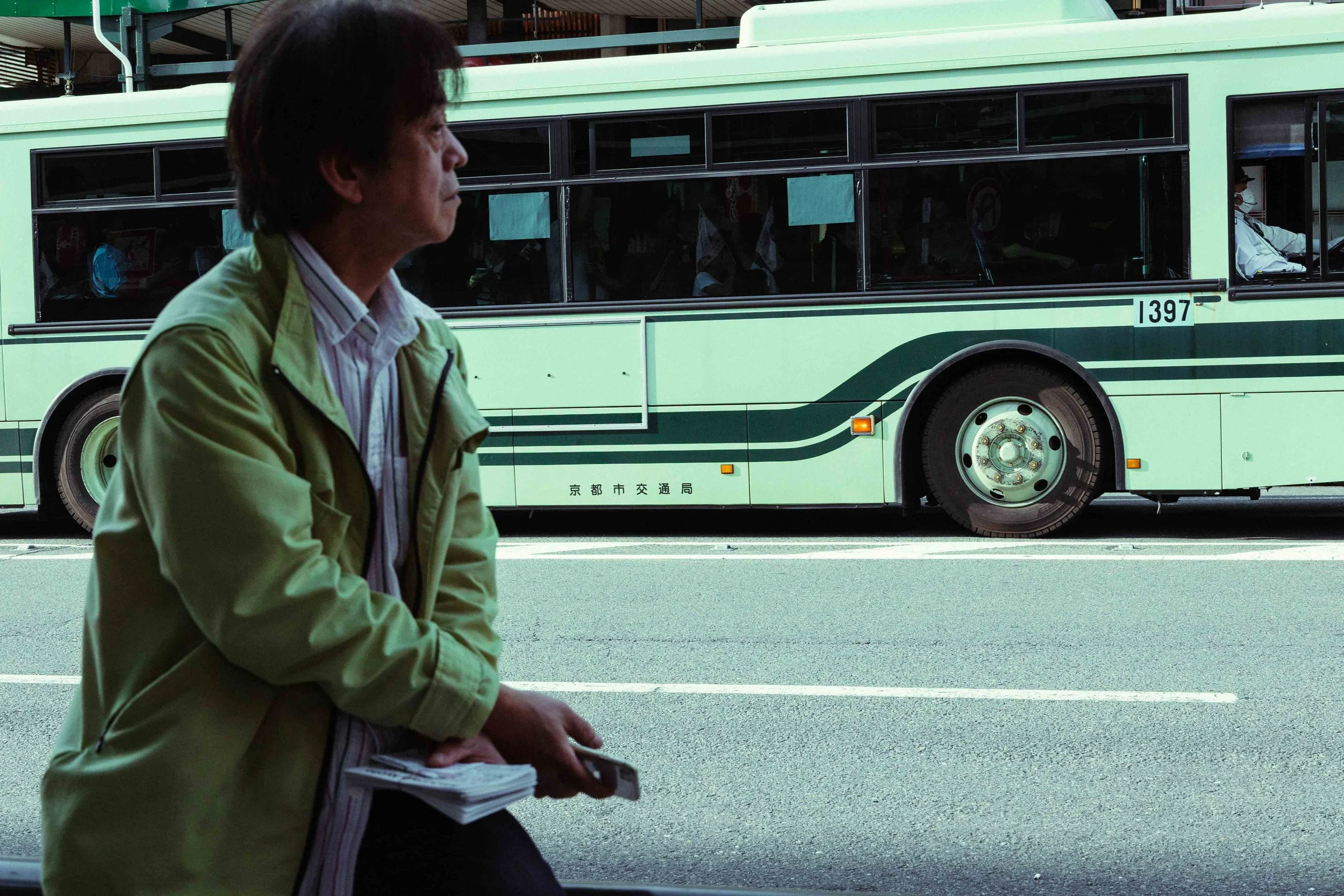
Transportation in Japan can feel confusing and overwhelming but I’m here to help.
Japan's train system is punctual, clean, well-signed, and almost incomprehensibly extensive. Understanding it takes a little time, but the investment is well worth it.
IC Cards: Your Secret Weapon
An IC card is a rechargeable contactless card that works on almost every train, subway, and bus across Japan. Think of it like an Oyster card in London or a Navigo in Paris, but better — it also works in convenience stores, vending machines, and many restaurants. For Osaka and the Kansai region, pick up an ICOCA card (issued by JR West) at Kansai International Airport or any major station. The name is a play on the Kansai dialect phrase 'Iko ka,' meaning 'Shall we go?' — which perfectly captures its spirit.
Top it up with cash at any ticket machine and tap in and out at every gate. All IC cards (ICOCA, Suica, Pasmo, etc.) are fully interchangeable across Japan since 2013, so whichever one you pick up is fine.
If you have an Iphone you can just add a card to the wallet, just select “Transportation card” and then search for Suica or Pasmo (maybe even ICOCA although I’m not sure about this one).
The JR Pass
The Japan Rail Pass gives unlimited travel on most JR lines nationwide for 7, 14, or 21 days. Whether it is worth buying depends entirely on your itinerary. If you plan to take multiple shinkansen (bullet train) journeys it can represent excellent value (for reference a one way Shinkansen from Tokyo to Osaka costs about 15000 yen). If you are mostly staying in the Kansai region, a Kansai regional pass will likely be cheaper.
Be aware that the JR Pass does not cover the fastest Nozomi and Mizuho shinkansen services — use the slightly slower Hikari or Sakura trains instead (which are less frequent). It also does not cover local subway lines, so keep your IC card topped up regardless.
In my experience it’s rarely worth the money.
Getting from Kansai Airport to Kyoto
Kyoto doesn’t have its own airport, but it’s easily reached via Japan’s incredible train network. The closest major airport is Kansai International Airport (KIX), about 75 minutes away by direct train or 90 minutes via the Limousine bus service. The train is way cheaper than the Limousine bus but I found the bus to be more convenient, especially if you have big suitcases.
Getting Around Kyoto
Kyoto is a city that "looks" close on a map but takes time to navigate.
Unlike Tokyo and Osaka, Kyoto relies heavily on buses. Your ICOCA/Suica card works here too but keep in mind that Kyoto’s buses are often packed and slow. Use the Subway (Karasuma and Tozai lines) or JR/Hankyu/Keihan trains whenever possible. Another option is, if you can, to rent a bike. Kyoto is flat and much more enjoyable on two wheels, just be careful to park it where you’re allowed to.
Getting to Know Kyoto: The Neighborhoods
Kyoto isn't just one big museum; it’s a collection of distinct villages, each with its own rhythm. Here is where to go, what to do, and how to make sure you actually get in.
Gion & Southern Higashiyama (The "Classic" Kyoto)
This is the Kyoto you see on postcards. Gion is the city’s world-famous Geisha district, and it’s arguably the most atmospheric neighborhood in all of Japan. Walking through Gion feels like a journey back to the Edo period. As you stroll down Hanamikoji Street, you’re surrounded by traditional wooden machiya (teahouses), narrow stone-paved alleys, and softly glowing lanterns that create a timeless, cinematic mood.
If you’re lucky—or patient—you might spot a Geiko or Maiko (apprentice geisha) elegantly making their way to an evening performance. It’s a rare and beautiful sight that captures the living history of Kyoto. If you’re interested in this, you might like these events: in spring (April), watch the Miyako Odori. In autumn (November), check out Gion Odori. Tickets for Miyako Odori sell out months in advance. Book via the official Gion Kobu website.
Kiyomizu-dera: Kyoto’s Iconic UNESCO World Heritage Temple
While you’re exploring the Gion and Higashiyama areas, a walk up the hillside to Kiyomizu-dera is an absolute must. This UNESCO-listed temple is one of the most popular things to do in Kyoto, and for good reason—it offers some of the most dramatic, sweeping views over the city skyline.
Kiyomizu-dera is world-famous for its massive wooden stage, which was remarkably constructed without the use of a single nail. Standing on this platform, you’re perched high above the maple and cherry trees, making it a premier spot for seasonal photography in Japan, especially during the autumn colors or spring blossoms.
Opening hours: 6am to 6pm
Entrance fee: ¥600
Website: https://www.kiyomizudera.or.jp/en/
Cultural Highlight: The Seiryu-e (Blue Dragon) Procession
If your timing is right, look for the Seiryu-e (Blue Dragon) Procession. This unique festival is held on March 15, April 3, and October 15. Watching the large blue dragon weave through the temple grounds and down the historic streets of Higashiyama is a spectacular sight—perfect for capturing the living traditions of Kyoto through your lens.
Yasaka Shrine: The Spiritual Gateway to Gion
Standing boldly at the end of Shijo-dori, Yasaka Shrine (formerly known as Gion Shrine) acts as the vibrant orange anchor for the entire Gion district. This is one of Japan's most famous shrines, dedicated to Susanoo-no-Mikoto, the god of storms and the sea. Its iconic vermilion gate is a primary landmark for any visitor, marking the transition from the bustling modern shopping streets into the sacred, historic heart of the city.
Beauty Water: Look for the small Utsukushi Gozen-sha sub-shrine within the grounds. Legend says applying a few drops of the "beauty water" here will bless both your skin and your heart.
Opening hours: 24/7
Entrance fee: free
Website: https://www.yasaka-jinja.or.jp/
The Dance of a Thousand Lanterns
What makes Yasaka Shrine a "must-do" for any photographer is the massive central dance stage. It is adorned with hundreds of paper lanterns donated by local Gion businesses, each inscribed with the name of the donor in elegant calligraphy. While the shrine is beautiful by day, it truly comes alive at dusk. When the lanterns are lit, they cast a warm, golden glow across the gravel courtyard, creating a cinematic atmosphere that perfectly captures the "Old Kyoto" aesthetic.
Photographer’s Note: Unlike many temples in Kyoto that close at 5:00 PM, Yasaka Shrine is open 24/7 and there is no entrance fee making it a very good spot for night photography. The contrast of the glowing lanterns against the dark night sky is incredible. Plus, if you walk through the shrine grounds toward the back, you’ll find yourself entering Maruyama Park, which is Kyoto’s premier spot for cherry blossom viewing.
Yasaka Kōshin-dō: The "Monkey Temple" of Higashiyama
Tucked away just a three-minute walk from the iconic Yasaka Pagoda is Yasaka Kōshin-dō, officially known as Daikokusan Kongoji Koshindo. While small in scale, it is one of the most vibrant and "Instagrammable" spots in the entire city. The temple is famous for its Kukurizaru—thousands of small, brightly colored cloth balls that represent "bound monkeys." According to local Kōshin belief, if you write a wish on one of these colorful talismans and sacrifice one of your smaller "greeds" or desires, your wish is much more likely to come true.
Opening hours: 9am to 5pm
Website: http://www.yasakakousinndou.sakura.ne.jp/
A Visual Masterpiece for Photographers
For anyone exploring Kyoto through a lens, the walls of rainbow-colored Kukurizaru offer an incredible pop of color against the weathered wood of the traditional temple architecture. It is a popular spot for visitors wearing rented kimonos, as the saturated tones of the talismans make for a perfect backdrop. Beyond the colors, keep an eye out for the Three Wise Monkeys ("See no evil, hear no evil, speak no evil") carved throughout the grounds, which serve as messengers to the temple's guardian deity, Shomen Kongo.
Pro Tip for the Shot: Because this temple is tiny and has become a viral sensation, it gets crowded almost immediately after opening. Arrive exactly at 9:00 AM to get a clean shot of the color-blocked walls before the selfie queues form.
teamLab Biovortex Kyoto: The New Frontier of Digital Art
If you’re planning a trip to Kyoto and want an experience that is totally immersive, there’s a new player in town. As of October 7, 2025, Kyoto officially has its own permanent digital-art sanctuary!
teamLab Biovortex Kyoto is bursting at the seams with the most interactive visual and sound installations I’ve ever experienced. I spent a solid two hours getting lost in the galleries, melting into a state of "full-bodied awareness." This isn't a gallery where you stand behind a rope; you are literally stepping into the art rather than observing it from the sidelines.
Many of the installations here explore complex ideas of life, perception, and the environment in incredibly creative ways. I won’t spoil the surprises for you, but it is easily one of the best things to do in Kyoto right now.
Photographer’s Note: Like the Tokyo locations (Borderless and Planets), the light here is constantly shifting. To capture the best shots, use a wide-angle lens and be prepared for low-light conditions. It’s an abstract photographer's dream come true!
Opening hours: 9am to 9pm
Entrance fee: from ¥4000 to ¥5600
Website: https://www.teamlab.art/e/kyoto/
Tickets: https://kyoto.tickets.teamlab.art/#/
Arashiyama: Kyoto’s Scenic "Western Wilds"
Located against the base of the mountains, Arashiyama feels less like a city and more like a serene, scenic retreat. It’s a place where nature and history collide—perfect for those looking to escape the urban buzz of central Kyoto.
Saihō-ji (Kokedera): The Legendary Moss Temple
If you want to experience a side of Kyoto that feels completely untouched by the modern world, Saihōji (Kokedera) Temple is the ultimate destination. This UNESCO World Heritage site is home to an extraordinary garden featuring over 120 varieties of moss, creating a lush, emerald-green carpet that feels like a scene from a Studio Ghibli film. Unlike the "hit-and-run" nature of many tourist spots, a visit here is a slow, meditative journey.
Weather Hack: Most tourists pray for sun, but for the "Moss Temple," a rainy day is actually better. The moss becomes incredibly vibrant and saturated when wet, and the reflections in the Golden Pond become much more dramatic.
The Zen Experience: Sutras Before Scenery
Now I don’t want to pretend I understand much about this but Google was helpful in understanding. What happens is you don’t just walk into the moss garden; you earn your way in. The visit begins in the main hall with Shakyō (sutra copying). You’ll sit in silence, tracing ancient Buddhist kanji with a brush and ink. Even if you don’t understand the characters, the rhythmic process is designed to calm the mind and prepare you for the spiritual beauty of the grounds. Only after this ceremony are you invited to wander the paths around the heart-shaped pond.
Photographer’s Note: This is a dream location for macro photography and textures. However, tripods, monopods, and selfie sticks are strictly prohibited to protect the ecosystem.
Logistical Checklist: The "Strict" Reservation Rule
Because the moss is incredibly fragile, Saihōji (Kokedera) Temple has one of the strictest entry policies in Japan. You cannot simply show up.
Age limit: First of all visitors must be 13 or older to ensure the quiet, meditative atmosphere is maintained.
Opening hours: The temple typically opens for a single session per day (usually starting around 9:00 AM or 1:00 PM). Arrive 15 minutes early; latecomers are often refused entry. Aim for a morning slot for soft, directional light filtering through the canopy.
Online Reservations: You can now book via their official website up to two months in advance.
Entrance fee: The entrance fee is ¥4,000 per person (cash only if paying on-site, though online booking usually requires pre-payment). It’s expensive (as far as entrance fees go in Japan) but it’s also a very exclusive place.
Bamboo Grove & Tenryu-ji Temple
The towering green stalks of the Arashiyama Bamboo Forestare a Kyoto icon. Right next door is Tenryu-ji Temple, a UNESCO World Heritage site. Its Zen garden is world-class for landscaping and offers incredible reflections in the central pond, especially during the autumn peak.
Photographer’s Note: To capture the Bamboo Grove without the crowds, you need to be there at the crack of dawn (around 6:30 AM). Once the "Torokko" train starts running, the area fills up instantly. For the best light in the gardens of Tenryu-ji, aim for the hour before sunset.
Okochi Sanso Villa: An Insider’s Escape
If the bamboo path feels too crowded, head to the Okochi Sanso Villa. This was the former home of a Japanese silent film star, and your entry fee (approx. ¥1,000) includes matcha and a traditional sweet. It is significantly quieter than the main path and offers some of the best panoramic views of the city.
Moving Through the Landscape: River Cruises & Scenic Rails
To truly experience the "Wilds," you need to get off the walking paths:
Hozugawa River Cruise
A traditional boat ride down the rapids. This is a 100% recommended experience for a different perspective of the gorge. Book online via Hozugawa Kudari well in advance if you’re visiting during Sakura (cherry blossom) or Autumn seasons.
Sagano Scenic Railway (The "Torokko")
This vintage train winds along the river through the mountains. Tickets for these open-air carriages sell out fast! You can buy them at JR stations or online exactly one month in advance.
Website: https://www.sagano-kanko.co.jp/en/
Fushimi: The Southern Gates & Kyoto’s Sake District
While most visitors only see the famous orange gates of the shrine, Fushimi is actually a multifaceted neighborhood and the historic heart of Kyoto’s sake-brewing industry. This area offers a perfect blend of spiritual icons and "hidden gem" local culture.
Fushimi Inari Taisha: The 10,000 Torii Gates
No trip to Kyoto is complete without walking through the endless tunnels of vermilion gates. If you want a unique visual story, time your visit for the Motomiya-sai (Thousand Lantern Festival) in July. Seeing the 10,000 torii gates illuminated by thousands of glowing lanterns is a surreal, once-in-a-lifetime experience.
Photographer’s Note: Fushimi Inari is open 24/7. While most people go at noon, the "blue hour" or early morning (around 6:00 AM) is when you’ll find the best light and the fewest crowds. The higher you climb the mountain, the more "private" the gates become for your shots.
Kyoto’s Sake District: Tradition in a Glass
Just a short walk from the shrine is a district lined with traditional white-walled sake breweries.
Gekkeikan Okura Sake Museum: A great place to learn about the brewing process. Walk-ins are usually fine here.
Fushimi Sakagura Kouji: For a more curated experience, I’d recommend a premium tasting here. Pro tip: It’s better to book a reservation if you’re visiting on a weekend.
Jikka-fune: The Canal Boat Ride
For a truly cinematic perspective, hop on a Jikka-fune. These are flat-bottomed wooden boats that glide through the canal lined with willow trees and sake breweries. Note that this only runs during the Spring (Sakura) and Autumn seasons. It’s a 100% recommended spot for capturing the "Old Japan" aesthetic from the water.
Cost: Approximately 1500 yen for adults and 750 yen for children.
Website: https://kyoto-fushimi.or.jp/fune/reserve
Central Kyoto & Kyoto Station Modern Marvels and Imperial History
Often dismissed as just a "transportation hub," Central Kyoto is where the city’s ancient power structures meet its modern daily life. It’s the gateway to the city and holds some of the most impressive architectural scale in Japan.
Photographer’s Note: Don’t ignore Kyoto Station itself. The futuristic steel-and-glass architecture, especially the "Skyway" tunnel and the massive illuminated staircase, offers a sharp, "cyberpunk" contrast to the wooden temples you’ll see everywhere else. It’s a great spot for architectural symmetry and long-exposure shots.
Nijo Castle: The Shogun’s Fortress
This was the Kyoto residence of the Tokugawa Shogunate. It’s most famous for its "nightingale floors"—wooden corridors designed to "chirp" when walked upon to alert guards of intruders. Keep an eye out for the Naked Flowers digital art event. These immersive illuminations usually take over the castle grounds during the Spring and Autumn seasons—it’s a spectacular blend of 17th-century architecture and 21st-century tech.
Pro Tip: The morning queues can be brutal. Buy your tickets online to skip the line.
Cost: From 800 to 1300 yen depending on the type of ticket.
Website: World Heritage Site Former Imperial Villa Nijo-jo Castle (Nijo-jo)
Location: see on Google Maps
Kyoto Imperial Palace: A Royal Scale
The Palace grounds are vast and covered in sea-like expanses of white gravel. While you can walk through the park freely, the inner palace buildings often have "Special Openings." These rare tours usually require a passport and a prior reservation via the Imperial Household Agency.
Website: ホーム - 京都御所
Nishiki Market: The "Kitchen of Kyoto"
If you want to capture the chaotic, colorful energy of Kyoto’s food culture, head to Nishiki Market. This narrow shopping street is packed with over 100 vendors.
Best Areas to Stay in Kyoto for First-Time Visitors
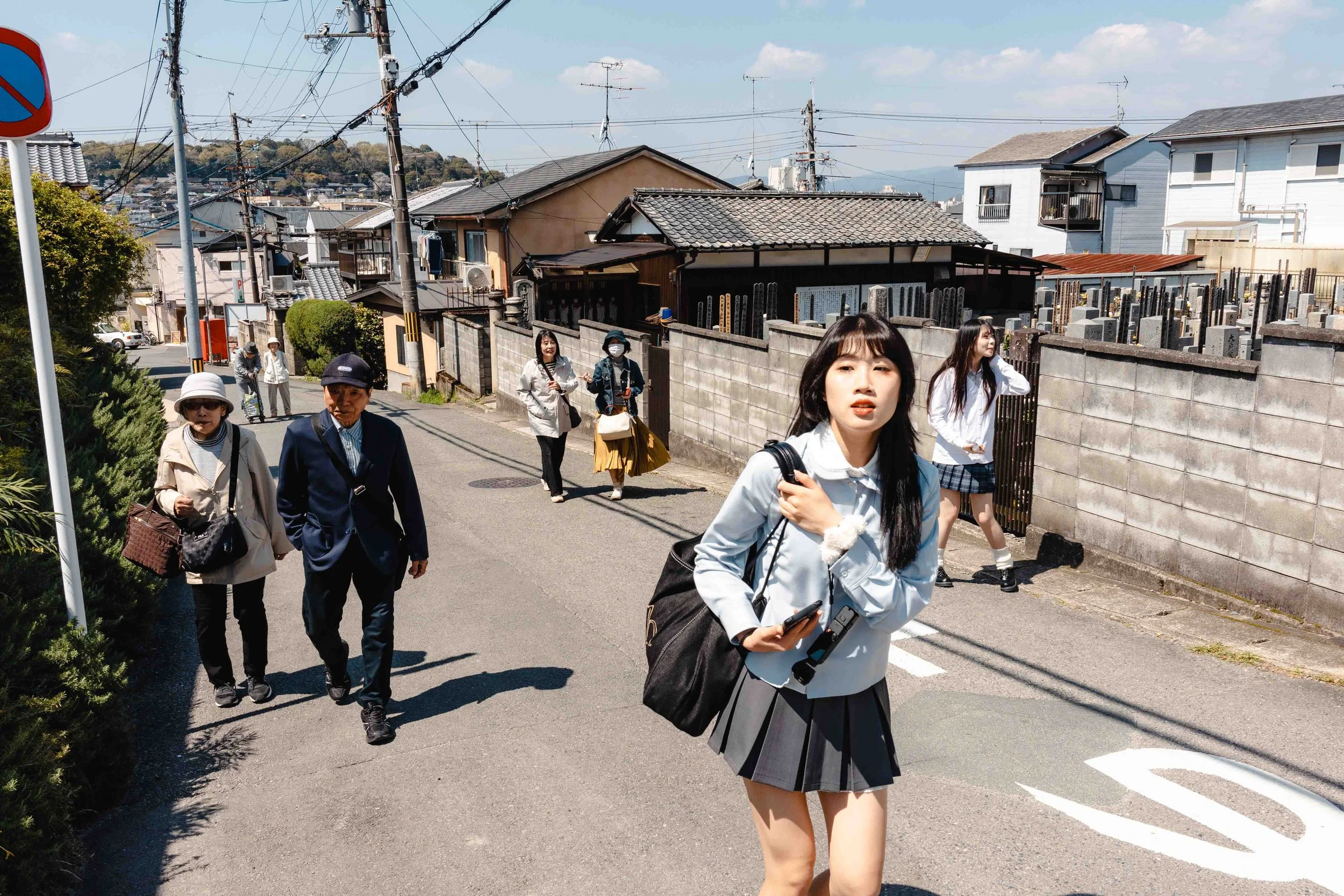
First time visitors might want to stay in a central area. As you can see more suburban areas are for long time residents.
Kyoto is a city of layers, and your choice of accommodation will completely dictate the "flavor" of your experience. Whether you are looking for traditional Japanese inns, boutique hotels, or modern apartments, the city offers a diverse range of stays for every budget.
If this is your first visit to Kyoto, I’d almost exclusively recommend basing yourself in Gion or Higashiyama.
These areas are the atmospheric heart of the city. Being here means you’re within walking distance of the main Kyoto points of interest, allowing you to wander through historic alleys and hidden tea houses without relying on the bus network. For a photographer, these neighborhoods are a dream, especially during the "blue hour" when the lanterns begin to glow.
Other neighborhoods you might consider are:
Shimogyo Ward: Near Kyoto Station, perfect for day trips to Nara or Osaka.
Downtown: Best for shopping and the Nishiki Market food scene.
The Ryokan Experience: A Japanese Cultural Must-Do
Whether it’s here in Kyoto or elsewhere on your Japan itinerary, I highly recommend booking at least one night in a Ryokan. It’s more than just a room; it’s a full immersion into omotenashi (Japanese hospitality). A traditional Ryokan stay usually includes:
Tatami floors and traditional futon bedding.
Access to Onsen baths (hot springs).
Kaiseki dining: A multi-course, seasonal art piece of a meal.
A Ryokan experience is a cultural must-do and remains one of the best things to experience in Japan.
Quick Tips for Booking Kyoto Accommodation:
Book Early: Kyoto is one of the most popular destinations in the world; the best Ryokans fill up months in advance.
Stay Near a Station: If you aren't in Gion, ensure you are near the Kyoto Subway or JR Lines for easy access.
Check for "Onsen" Access: Even some modern hotels offer public baths—a great way to relax after a long day.
Kyoto’s "Big Three" Festivals (The Bucket List)
If your trip aligns with these dates, you need to plan your logistics (and hotels) well in advance (most websites reccommend 6 months in advance).
Aoi Matsuri
When: May 15
Where: Central/Northern Kyoto
What to Expect: Heian-era imperial procession.
Booking: Paid seating available via Kyoto Travel. TBD GETOURGUIDE
Gion Matsuri
When: July. It runs all month but July 17 & 24 are the main parades.
Where: Downtown (Shijo)
What to Expect: Massive 12-ton floats.
Booking: No booking for street viewing; paid seats available in June. TBD GETOURGUIDE
Jidai Matsuri
When: October 22
Where: Imperial Palace to Heian
What to Expect: A "parade of ages" through Kyoto's history.
Booking: Paid seating TBD
Where to get more info?
The most reliable source for daily events and festival timings is the Official Kyoto City Tourism Association (Kyoto Travel).
They have a monthly calendar that lists everything from small flea markets to major parades.
Sample Itineraries: From 2 to 5 Days
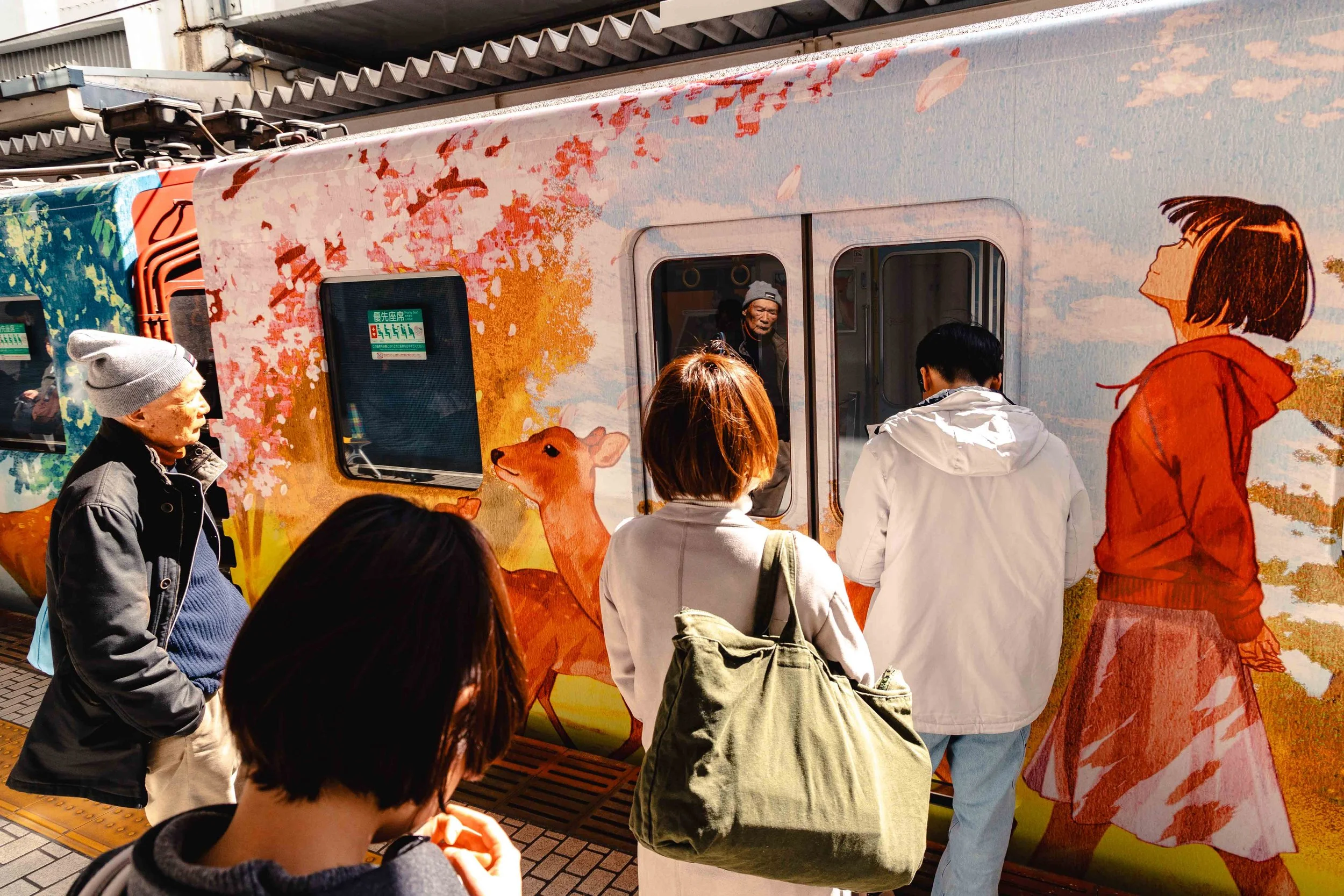
So many things to do and so little time.
2-Day "Icons" Itinerary
Day 1: The Eastern Slope. Start at Kiyomizu-dera at 6:30 AM. Walk down through Sannenzaka and Ninenzaka before shops open. End at Yasaka Shrine and explore Gion.
Day 2: The Contrast. Morning at Fushimi Inari (hike past the first 15 minutes to find empty paths). Afternoon in Arashiyama, but skip the main bamboo path—head to Adashino Nenbutsu-ji for a "secret" bamboo grove.
3-Day "Culture & Zen" Itinerary
Day 1-2: Same as above.
Day 3: The Golden Route. Visit Kinkaku-ji (Golden Pavilion) at opening (9:00 AM). Take a taxi to Ryoan-ji for the famous rock garden. Finish at Nishiki Market for a street food crawl.
4-Day "Deep Dive" Itinerary
Day 1-3: Same as above.
Day 4: The Philosopher’s Path. Start at Ginkaku-ji (Silver Pavilion). Walk the canal path south. Stop at Honen-in (a hidden gem) and end at the massive Nanzen-ji temple complex.
5-Day "Rural Escape" Itinerary
Day 1-4: Same as above.
Day 5: Northern Mountains. Take the Eizan Railway to Kibune and Kurama. Hike the forest trail between the two mountain villages and visit Sanzen-in in Ohara for its world-class moss gardens.
“Unique” Day Trip Ideas
While Nara and Osaka are the most common day trips, these locations offer a more distinct or "hidden" experience:
Uji (Matcha & History): Only 20 minutes away, Uji is Japan's green tea capital. Visit the stunning Byodoin Temple and sample matcha-infused everything—from ice cream to soba noodles.
Ohara (Rural Retreat): A peaceful village in the northern mountains known for Sanzen-in Temple. It is famous for its moss gardens and refreshing rural atmosphere, perfect for escaping the city crowds.
Amanohashidate (The "Bridge to Heaven"): Located on the northern coast, this 3.6km pine-covered sandbar is ranked as one of Japan's three most scenic views. You can pair it with a visit to the nearby fishing village of Ine, known for its unique "funaya" (boathouses).
Lake Biwa (Nature & Cycling): Just 10 minutes by train to Otsu, you can explore Japan's largest lake. Visit the floating torii gate at Shirahige Shrine or take a canal boat ride in the merchant town of Omihachiman.
Where to Eat: Kyoto on a Budget
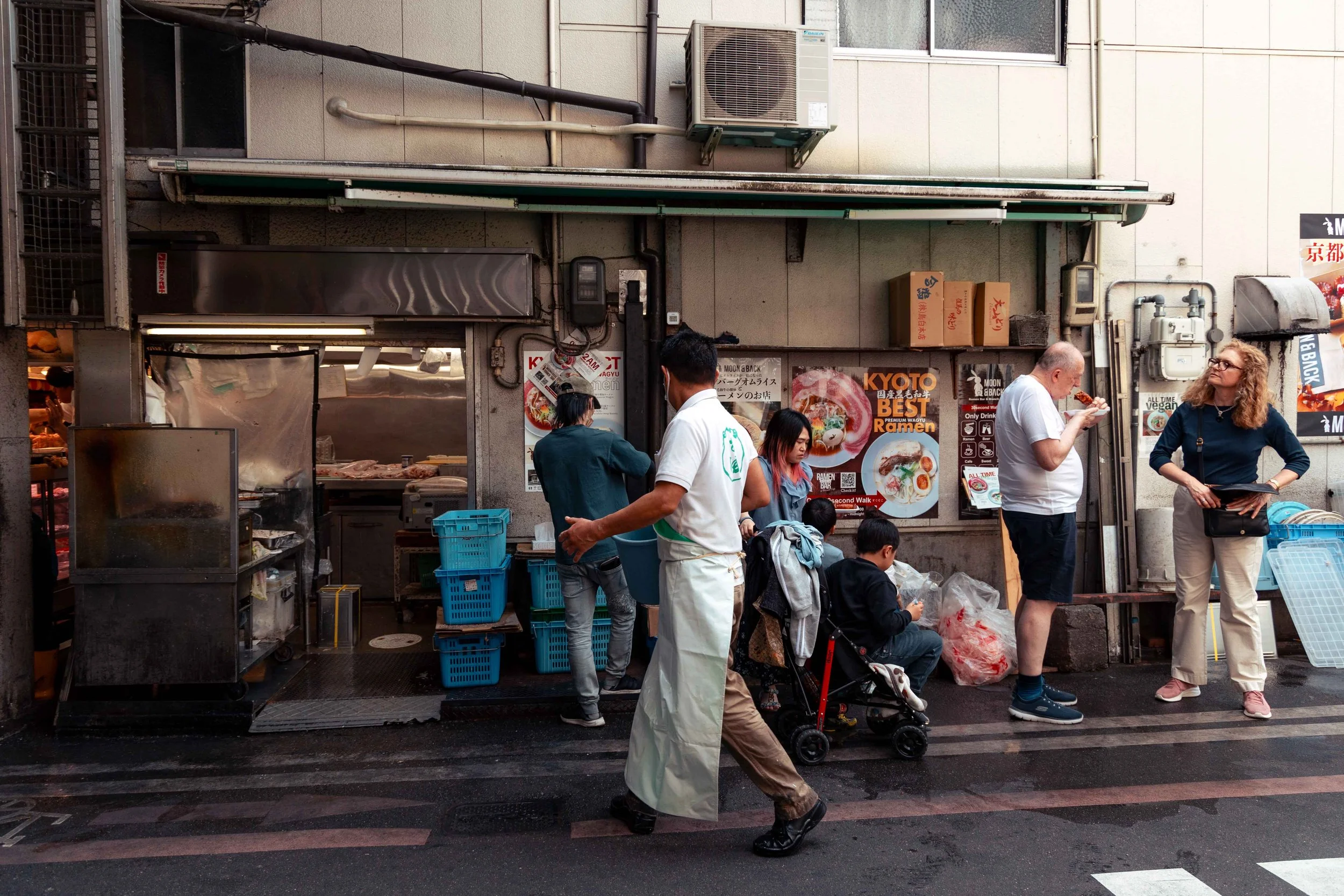
It’s hard to go wrong with food in Kyoto.
Kyoto has a reputation for expensive Kaiseki (fine dining), but if you know where to look, you can find incredible meals for under ¥1,500. Here are a few of my favorite spots that are both wallet-friendly and visually interesting. You can find the full Google Maps lists here: Drinks and Food.
Nishiki Market (The "Kitchen of Kyoto")
The 400-year-old Nishiki Market is a must for street food. It’s a narrow, colorful arcade perfect for "snack hopping." Here’s a few things you might want to try:
Tako Tamago: A baby octopus with a quail egg in its head (¥300–¥500). It’s the ultimate quirky food photo.
Soy Milk Doughnuts: Get a bag of 10 at Konnamonja for around ¥300.
Fresh Sashimi Skewers: High-quality (I’ve been told) fish for a fraction of restaurant prices.
Japanese Fried Chicken: Not as good as the Korean but still pretty good!
Kyoto Ramen Koji (Kyoto Station, 10th Floor)
If you are at the station and hungry, head to the "Ramen Corridor." It features eight different regional styles of ramen from all over Japan. Most bowls are between ¥800 and ¥1,200 but be sure to have cash as you order trough ticket machines. Try the Kyoto-style ramen, which usually features a rich soy-sauce-based chicken broth with plenty of thin-sliced pork.
Wajoryomen Sugari
More Ramen: Wajoryomen Sugari is tucked away in a renovated traditional townhouse (machiya) near Nishiki Market. The entrance is so discreet—marked only by a small sign—that it feels like a private club for ramen enthusiasts. It specializes in rich tsukemen (dipping noodles) with unique toppings like grilled beef offal.
Ootoya
Ootoya is a high-quality "Teishoku" chain that locals love. It’s healthy, reliable, and very affordable. A set meal usually includes a main (like grilled Hokke fish or black vinegar chicken), rice, miso soup, and pickles. Most sets are around ¥900–¥1,300. It’s the best way to get a balanced Japanese "home-cooked" meal. There’s a store in central Kyoto, near Nishiki market and one further north in the Aeon Mall.
Musashi Sushi
If you want sushi without the "market price," this is one of the best Kaiten (conveyor belt) spots in the city. It’s fast, the quality is surprisingly good (although I’m definitely not a fish person so take this with a grain of salt) for the price, and it has a great "hectic" energy for candid photography. Most plates start at ¥160. Yes, you read that right. This one too has a shop in central Kyoto and one at Kyoto station.
Chao Chao Gyoza
Chao Chao Gyoza is popular because of their "wing-style" gyoza (connected by a crispy thin layer of batter). It's small, loud, and atmospheric. Get the classic pork gyoza!
Roast Beef WATANABE
This has nothing to do with being on a budget but it’s very good so I thought I should mention it. Roast Beef WATANABE is a serene (and expensive), house-style restaurant located on a hill in Kamigamo. It offers a peaceful retreat that feels like dining in a French country home, complete with a garden view. Their specialy isfive different roast beef courses featuring cuts like rump and ichibo (sirloin cap), grilled right before your eyes.
Akagakiya
Akagakiya is a legendary local izakaya that remains a favorite among residents for its high-quality seasonal dishes and traditional atmosphere. t is particularly famous for its oden and duck breast, served in a quiet, adult-oriented setting. Reservations are highly recommended as it fills up quickly with locals almost every night.
The Gion Duck Phenomenon: Noodles vs. Rice
Speaking of duck, let me talk about my favorite place(s). If you see a tiny sign in an alleyway with nothing but a 🦆 and a 🍜 (or 🍚) emoji, you’ve found it. These two spots are high-concept eateries that blend French culinary techniques with Japanese soul food.
The menu is written entirely in emojis. You choose your dish, size and toppings based on symbols, though the staff (who speak excellent English) will explain the "translation" to you.
Gion Duck Noodles
Gion Duck Noodles sits in an incredibly narrow, dimly lit alleyway leads to a sleek, 8-9 seat counter. It feels more like a speakeasy or a boutique French bistro than a ramen shop. Their signature dish is duck Ramen with cherry or mousse sauce. Instead of the usual pork-heavy tonkotsu, you get a refined duck broth. The "Tsukemen" (dipping noodles) is often served with a thick berry-based sauce that sounds strange but is a masterclass in flavor balancing.
The "Two-Part" Queue: Because the alley for the Noodle shop is so narrow, the line often breaks into two sections to avoid blocking neighbors. If you see a short line at the door, look further down the alley or around the corner—there’s likely a second "overflow" group waiting there.
If the Gion line is soul-crushing, they recently opened a much larger, more "classy" location in Arashiyama. It’s easier to get into and offers a similar menu with a bit more breathing room.
Gion Duck Rice
Gion Duck Rice is located in a basement near Gion Duck Noodles, this spot focuses on Kamo Hitsumabushi (duck over rice) and I think it’s my favorite restaurant in Kyoto. You’re served a wooden tub of rice topped with succulent, slow-cooked duck and a rich orange egg yolk (from chickens fed a special diet, often paprika, to enhance the color, a specialty of Kyoto). The overall experience is closer to a food ritual but, against all SEO reccomendations, I won’t tell you anything about this. Go and find out for yourself, I can promise it’s worth it.
Opening hours: Both spots open at 11:00 AM. To get into the first seating (usually only 8–11 people), you should be in line by 10:40 AM. If you miss the first cut, expect a 45–60 minute wait.
Street Photography in Kyoto
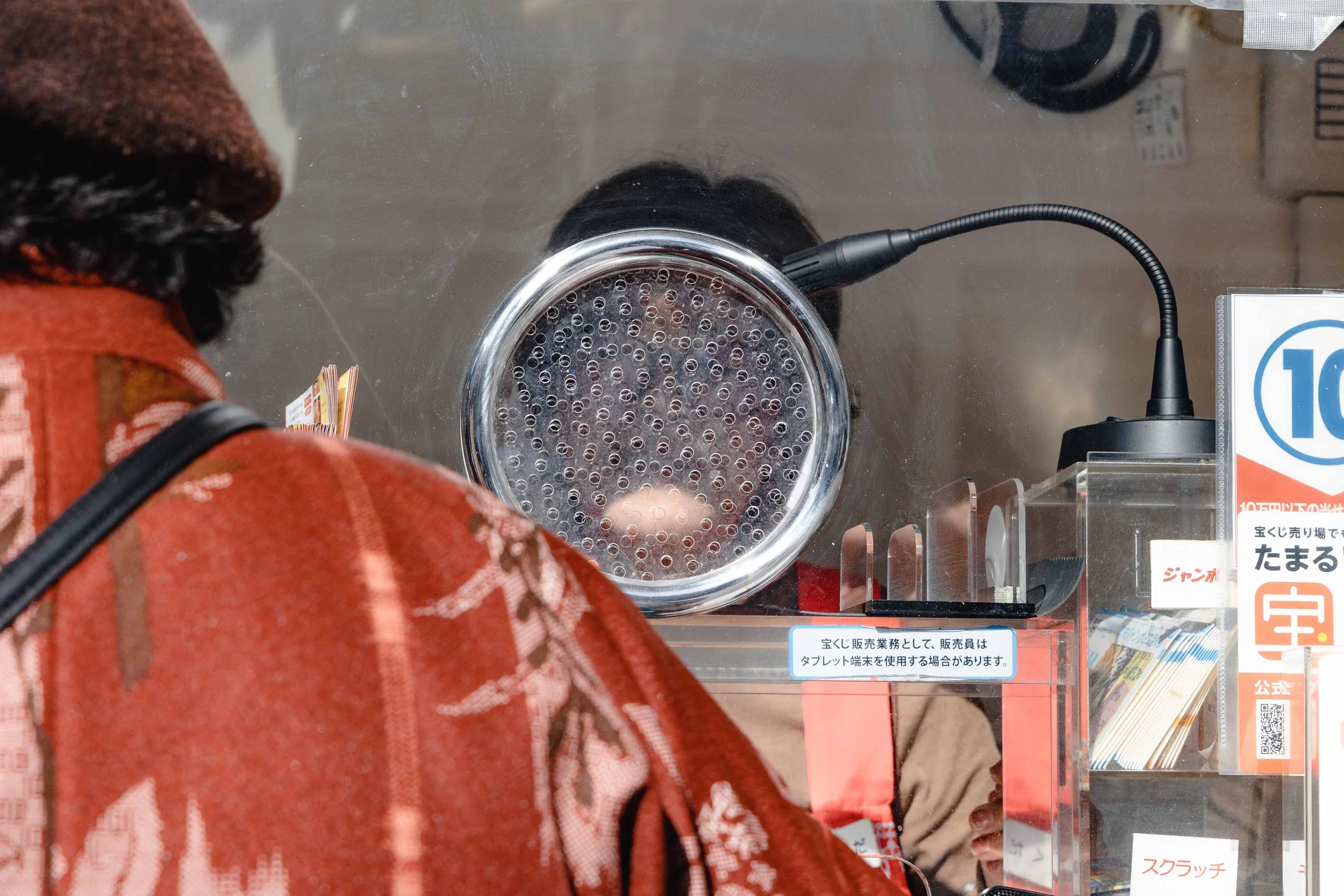
People don’t care too much about cameras in touristy places like Kyoto.
Kyoto offers a different pace for street photography compared to the neon chaos of Osaka. Here, it’s about textures, shadows, and the "human element" interacting with history. If you want to capture the "soul" of the city in 2026 without being part of the problem, you need to understand the visual and social friction of the streets.
The "Rainy Day" Hack: Kyoto’s dark wood architecture pops when wet. Photographing Gion or Pontocho Alley during a light drizzle creates a cinematic, high-contrast look that defines "Modern Kyoto."
The Best Spots for the Lens
Pontocho Alley (Night) This is a narrow, atmospheric alley running parallel to the Kamo River. It’s packed with high-end restaurants and traditional lanterns. Focus on the "compression" of the narrow alleyway and to capture the warm glow of the lanterns against the dark wooden facades.
Kyoto Station (Modern Geometry) In stark contrast to the rest of the city, the station is a futuristic marvel of glass and steel. Use the massive escalators and the "Skyway" bridge for architectural geometry. The reflections on the glass during the blue hour are incredible.
Fushimi Inari at Night While everyone goes during the day, the thousands of vermilion torii gates take on a haunting, cinematic quality after dark. Long exposures are your friend here. The orange gates glow under the artificial lights, creating a "portal" effect that looks straight out of a movie.
Hunting for "The Glow" (Low-Key Aesthetics)
Kyoto isn't a city of bright sunlight; it’s a city of shadows. The most compelling street photography happens in the transition zones. Look for the specific way the dark, weathered wood of traditional houses absorbs light. on a rainy day, these buildings turn nearly black. Position yourself where a single warm lantern light spills onto the wet pavement. This "low-key" aesthetic is the DNA of Kyoto's visual identity.
The "Vantage Point" Strategy
Most people shoot from eye level on the main streets.
The River perspective: Go down to the banks of the Kamo River. From below, the silhouettes of people crossing the bridges against the sunset create a timeless, graphic look that avoids the clutter of modern signage and power lines.
The Taxi Reflection: Kyoto’s taxis are meticulously polished. Instead of photographing a shrine directly, look at the reflection in a black car door or a shop window. It distorts the "perfection" of the landmark and adds a layer of modern Kyoto grit.
Avoiding the "Human Clutter"
You don't need a 5:00 AM alarm to get an empty street shot if you know where to look. While the main street of Gion (Hanamikoji) is packed, the parallel alleys just one block over often have the exact same architecture but zero foot traffic.
Frequently Asked Questions: Kyoto Travel & Photography
How many days should I spend in Kyoto?
To see the main highlights (Gion, Arashiyama, and Fushimi Inari) without rushing, I recommend 3 days (I think you can do it in 2 in the offseason). But if you are a street photographer, you’ll want extra time to revisit spots like Pontocho or Higashiyama at different times of the day to catch the best light.
Is it true I can’t bring my suitcase on buses?
To combat "overtourism," drivers may deny you boarding if you have a checked-bag-sized suitcase.
You can use Hands-Free Kyoto. Drop your bags at the "Crosta" counter at Kyoto Station by 10:00 AM, and they will be in your hotel room by 6:00 PM for roughly ¥2,000. It's the only way to move through the city without feeling like a nuisance.
Another service you can take advantage of is Takkyubin(luggage delivery services) to send your bags from the airport or your previous hotel directly to your Kyoto accommodation.
Is the Bus One-Day Pass dead?
Yes. It was replaced by the Subway & Bus One-Day Pass (¥1,100). The city is actively trying to push tourists into the subways. Take the Karasuma or Tozai subway lines as close as possible to your destination, then walk or take a "short-hop" taxi for the last mile.
Is Kyoto expensive?
Kyoto caters to all budgets. A budget day (hostels/street food) is around ¥9,500 ($65). A mid-range day (hotel/one nice meal) is closer to ¥20,000 ($135). Note: As of 2026, a new progressive accommodation tax is in effect; high-end luxury stays now carry a significantly higher nightly tax.
Is Kyoto more expensive than Osaka or Tokyo?
Generally, yes. While transportation and street food costs are similar, accommodation and traditional dining (like Kaiseki) tend to be higher in Kyoto due to its status as a premium cultural destination. However, by using my "Budget Food" tips and staying near Kyoto Station instead of Gion, you can easily keep costs down.
What about the "Luxury Stay" tax hike?
As of March 1, 2026, Kyoto has the highest accommodation tax in Japan. This tax is usually not included in your initial Agoda or Booking.com total and is collected at check-in. It is a tiered system based on your nightly room rate:
Budget (Under ¥20,000/night): You’ll pay a modest ¥200–¥400 per person, per night.
Premium (¥50,000–¥99,999/night): The tax jumps to ¥4,000 ($27) per person.
Ultra-Luxury (¥100,000+/night): Be prepared for a ¥10,000 ($65+) tax per person, per night.
Can I use credit cards everywhere?
No. While large hotels and department stores take cards, many temple entrance fees and small "hole-in-the-wall" restaurants are cash only. Always carry at least ¥10,000 in physical currency.
When is the best time of day for photography in Kyoto?
Sunrise is the golden rule here. Popular spots like the Arashiyama Bamboo Grove or the Yasaka Pagoda become extremely crowded by 8:00 AM. For street photography, the "Blue Hour" (just after sunset) in Pontocho and Gion is magical, as the lanterns provide a warm, cinematic glow against the deepening blue sky.
Is the JR Pass worth it if I am visiting Kyoto?
If you are only traveling between Tokyo, Osaka, and Kyoto, the standard JR Pass is likely not worth it at current prices. It is usually cheaper to buy individual Shinkansen tickets or use a regional Kansai Thru Pass if you plan on doing multiple day trips to Nara, Kobe, or Himeji.
Can I take photos of Geisha (Geiko) and Maiko?
You must be very respectful. While you can photograph them if they are in public spaces, do not stop them, touch them, or block their path. In many private alleys of Gion, photography is strictly prohibited with heavy fines (up to ¥10k) to protect their privacy. Always look for the "No Photography" signs.
How do I get to Kyoto from the airport?
Kyoto does not have its own airport. My reccomendations are:
From Kansai International (KIX): Take the Haruka Express train (75 mins).
From Itami Airport (ITM): Use the Airport Limousine Bus (approx. 50-60 mins).
What is the best way to get around Kyoto?
Kyoto relies mostly on buses and bicycles. The city is very flat, making it perfect for cycling. For longer distances, use the Karuma and Tozai subway lines or the JR Sagano line to reach Arashiyama quickly.
Do I need to book temples in advance?
Most major temples (Kinkaku-ji, Fushimi Inari, Kiyomizu-dera) do not require booking. However, specific "Special Openings," imperial villas (Shugakuin or the Katsura), or the famous moss temple (Saihō-ji) require reservations weeks or even months in advance.
I heard Kyoto is starting "Dual Pricing." Will I pay more than locals for food?
As of early 2026, the Japanese government is drafting guidelines for "Dual Pricing," but it’s mostly targeting entry fees and public transit. You might see a "Tourist Rate" for a city bus (potentially ¥400 vs ¥200 for locals) or at major landmarks. Most restaurants still have a single menu for everyone, but don't be surprised if a temple entrance fee has a "Non-Resident" surcharge.
What do I do with my trash? I can't find a single bin!
This is the #1 stressor for first-timers. Japan removed most public bins for security reasons in the 90s (although they are reintroducing some in Kyoto) so now you are expected to carry your trash back to your hotel but there are ways around it. Look for vending machines; they almost always have a small bin specifically for cans and bottles only. For food wrappers, look for a convenience store as they usually have bins near the entrance, provided you bought something there.
Is it true I can't walk and eat?
In the historic districts (Gion and Nishiki Market), yes. Walking while eating (tabearuki) is considered "low class" and messy. At Nishiki Market, you must eat your snack standing directly in front of the stall where you bought it. In Gion, there are signs explicitly forbidding eating while walking to prevent stains on people's expensive kimonos.


Welcome to Hong Kong
Hong Kong is a vertical labyrinth of raw cinematic energy, making it an absolute dream for street photography. It’s a city of thrilling visual contrasts—where the intense, neon-lit density of Mong Kok gives way to quiet, hidden alleyways, and grand colonial architecture sits in the shadow of towering glass skyscrapers. From double-decker trams slicing through seas of commuters to abstract reflections, moody shadows, and steam rising from street food stalls, Hong Kong is an endless playground of geometry, scale, and human emotion.
Join internationally recognised street photographers Paolo Maschio and Tom Bugatti (website | Instagram) for an immersive workshop designed to sharpen your eye, refine your technique, and help you carve out your own unique visual voice. Over two full days, we’ll explore two distinct philosophical styles: Paolo’s humanistic approach—focusing on raw emotion, proximity, and individuals navigating the city—and Tom’s formalistic approach, where human subjects become elements of geometry, light, reflection, and abstraction within a larger frame.
Workshop at a Glance
Dates: 16-17 of January 2027
Location: Hong Kong, Hong Kong
Duration: 2 days
Price: 600€ per person
Skill Level: All levels welcome
Group Size: Maximum 10 participants
What to Expect
Two focused days, two distinct visual philosophies, and a city that never stops moving. You’ll be gently pushed to shoot more instinctively, to take the frame you almost talked yourself out of, and to trust your eye whether you're capturing close-range human emotion or abstracting subjects into geometric architecture.
Expect a genuine mix of theory, image critique, and extensive field shooting in one of the most cinematic cities in the world. As participants sign up, we will reach out directly to understand your specific goals and visual interests. Depending on the group's preferences, we will tailor our on-the-street approach—either splitting into smaller targeted groups or alternating leads—to ensure maximum personal attention.
With two instructors sharing the lead, you'll benefit from a rich dual approach. Ultimately, our goal isn't to make you shoot like us, but to help you develop your own distinct way of seeing. There’s no competition here—just a community of photographers learning from two complementary perspectives and from each other.
What You’ll Learn
Whether you've never done street photography before or you're looking to break through a creative plateau, this workshop is designed to give you concrete tools you can keep using long after you leave Hong Kong.
Over the two days we'll cover:
Humanistic vs. Formalistic Approaches — choosing whether to tell a story through personal emotion or through abstract shape, reflection, and structure;
Reading a scene — how to anticipate moments before they happen;
Composition and framing — layers, geometry, and urban scale;
Overcoming hesitation — practical techniques for shooting confidently up close;
Working with available light — navigating moody shadows, neon, and high-contrast reflections;
Editing and curation — how to select your strongest images and understand why they work.
Requirements
No prior experience with street photography is required but you’ll definitely need:
A camera you're comfortable using — DSLR, mirrorless, compact or film, all welcome;
Lenses: Wide lenses for close-quarters shooting are great, but if you are interested in capturing architectural reflections, geometric details, or abstract compositions, please make sure to bring a telephoto lens (100mm or longer);
Comfortable shoes (expect to walk several Km each day);
A laptop for reviewing and post-producing images;
Curiosity, patience, and respect for the people and places we photograph.
Pricing & Booking
The price of the workshop is €600 per person,* and it includes the following:
Pre-workshop outreach to understand your personal goals and tailor the experience;
Portfolio reviews by both Paolo and Tom;
Two days of guided shooting in Hong Kong’s most photographically rich neighbourhoods;
Theory sessions exploring humanistic, formalistic, and abstract street photography;
Daily photo critiques — reviewing your images together and understanding what's working and why;
Personal feedback tailored to your individual level and style.
Transportation, meals, drinks, travel insurance, and any other incurred costs are not included and are to be paid individually.
* All workshop participants receive a 10% discount on any future workshops they attend with me (co-sponsored workshops with other instructors excluded).
Cancellation
There are no refunds in case you need to cancel.
If we need to cancel, you will be refunded in full. We are not responsible for any reimbursement of travel expenses or other costs incurred by participants in the event that we need to cancel. Travel insurance covering cancellations, missed flights, and similar is strongly recommended. There are no partial refunds in the event a participant misses days or takes time off during the workshop for any reason.
FAQ
Do I need to be an experienced photographer?
Not at all. This workshop is open to all skill levels. The only requirement is that you're comfortable handling your own camera. Whether you're just starting out or you've been shooting for years and want fresh eyes on your work, there's something here for you.
What camera should I bring?
Whatever you already own and feel comfortable with. Street photography is about seeing, not gear. A compact camera or even a film camera is absolutely fine but you should know how to operate it.
Will we stay in the same hotel?
Accommodation is not included in the price. If you want I can share recommended areas to make it easy to stay close to the group.
Is travel insurance required?
I strongly recommend taking out travel insurance that covers trip cancellations, medical expenses and lost equipment. This is your responsibility to arrange independently.
I have a question not answered here — can I get in touch?
Absolutely. Reach me through the contacts section of this website and I'll get back to you as soon as I can.